 Facebook
 Instagram
 Twitter
 Youtube
 TikTok
 Newsletter Subscribe
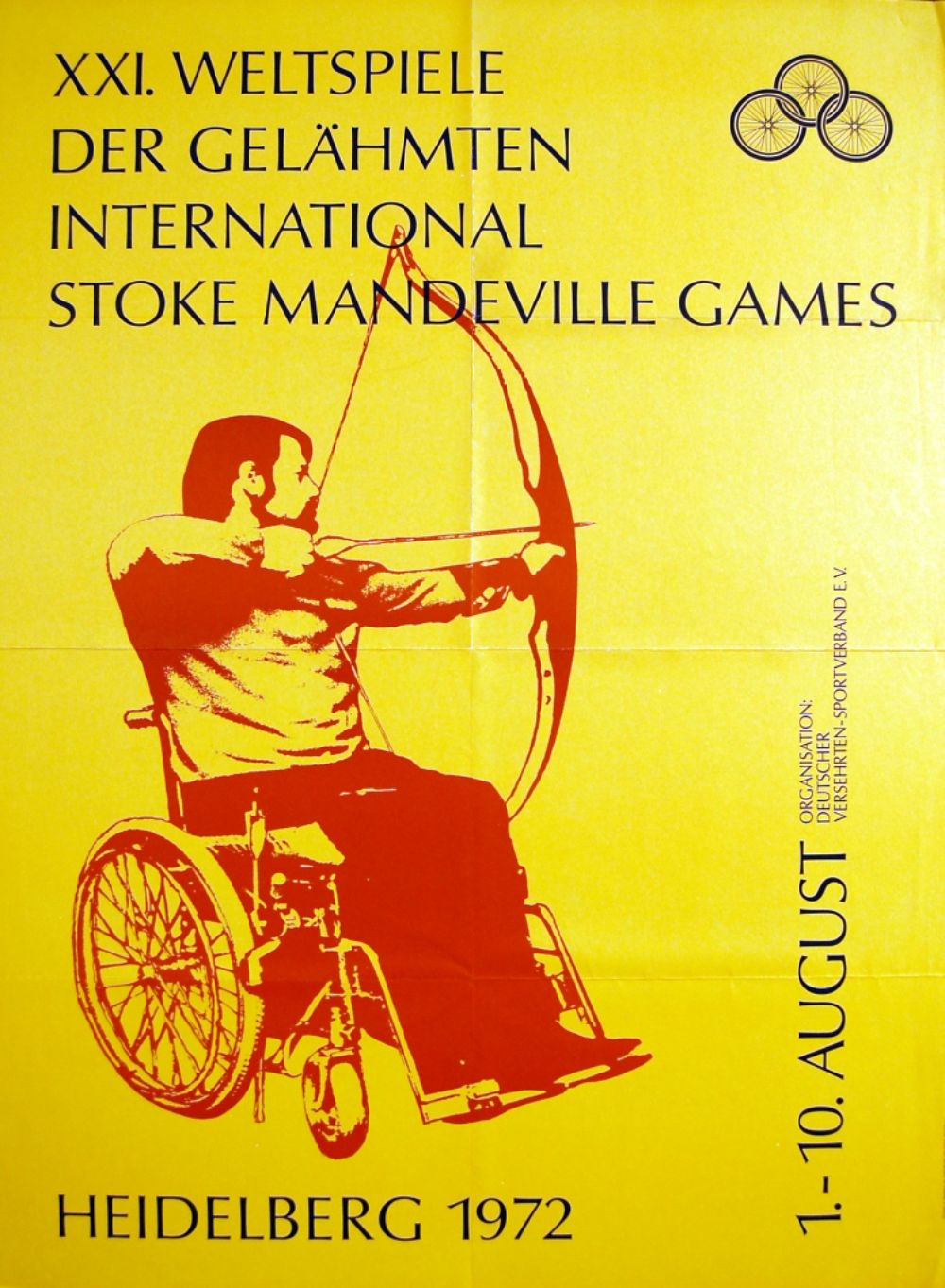
HEIDELBERG 1972 PARALYMPIC GAMES
The 1972 Paralympics were not held in Munich, the venue of the Olympics, despite the International Stoke Mandeville Games Committee hoping for the German Disabled Sports Association (DVS) to stage the Paralympics the city.
After the Olympics, the Olympic Village was closed and converted in to private apartments. The DVS was unsuccessful in finding suitable accommodation in Munich for athletes.
Heidelberg stepped in and invited the organisers to stage the Games at the University’s Institute for Physical Training. Overall 984 Para athletes from 43 countries took part. The Games featured 10 sports.
SPORTS
The Games featured 10 different sports; archery, Para athletics, dartchery, lawn bowls, snooker, Para swimming, table tennis, weightlifting, wheelchair fencing and wheelchair basketball.
Amputees and vision impaired athletes were not yet allowed to participate in the Paralympics.
OPENING CEREMONY
Dr. Gustav Heineman, the President of the Federal Republic of Germany, was the patron of the Games and officiated the Opening Ceremony on 2 August.
MEDALS
Host nation Germany nearly doubled second-placed USA in the gold medal tally, but the Americans finished with 74 overall medals, while Germany finished with 67. The top two were followed by Great Britain, South Africa and the Netherlands.
OUTSTANDING PERFORMANCES
A slew of new world records were broken in swimming, highlighted by Van der Bender’s performance in the 100m freestyle. The Dutchman swam the length in a time of 1:12.40 minutes.
Zipora Rubin of Israel set a world record in javelin with a mark of 18.5m.
ATTENDANCE AND COVERAGE
Heidelberg became remembered for the richness of social and cultural activities during the games.
It was here that the idea of a “Beer Tent” for all participants was started. The Beer Tent, a big marquee set up at the Rehabilitation Centre, became a focal point for informal evening entertainment. This tradition was to follow in future annual International Stoke Mandeville Games and the Paralympic Games of 1976, 1980 and 1984.
Heidelberg also saw capacity crowds at several of its events, including the men’s wheelchair basketball final. Nearly 4,000 fans packed the house to watch the USA defeat the defending champions, Israel, 59-58, to win the gold medal.