 Facebook
 Instagram
 Twitter
 Youtube
 TikTok
 Newsletter Subscribe
IPC Classification
what is classification? |
|---|
|
Challenging the interests of Para sport is the threat of one-sided and predictable competition, in which the least impaired athlete always wins. Classification is the cornerstone of the Paralympic Movement, it determines which athletes are eligible to compete in a sport and how athletes are grouped together for competition. In Para sports, athletes are grouped by the degree of activity limitation resulting from the impairment. This, to a certain extent, is similar to grouping athletes by age, gender or weight. Different sports require athletes to perform different activities, such as: sprinting, propelling a wheelchair, rowing and shooting. As sports require different activities, the impact of the impairment on each sport also differs. Therefore, for classification to minimise the impact of impairment on sport performance, classification must be sport specific. Classification aims to minimise the impact of the impairment on athletes’ performance so that the sporting excellence determines which athlete or team is ultimately victorious. Ensuring that athletes are classified prior to competing is crucial to safeguarding the integrity and credibility of the competition. It is important to underline that the competitive structure provided by classification systems is not only key for elite sport but also necessary for promoting grassroots participation in Para sports for people with an impairment. |
HOW DOES classification WORK? |
|---|
|
Athlete Evaluation Classification is carried out through a process called “Athlete Evaluation” that comprise procedures for the assessment of athletes and the allocation of Sport Class and Sport Class Status. Athlete Evaluation answers three fundamental questions: 1. Does the athlete have an Eligible Impairment for this sport? 2. Does the athlete’s Eligible Impairment meet the Minimum Impairment Criteria of the sport? 3. Which Sport Class should the athlete be allocated in based on the extent to which the athlete is able to execute the specific tasks and activities fundamental to the sport? Imagen
First Step: Determining if an athlete has an Eligible Impairment Any athlete wishing to participate in Para sport competition must have an Underlying Health Condition that leads to a permanent Eligible Impairment. The Paralympic Movement offers sporting opportunities for athletes with an impairment belonging to one of ten Eligible Impairment types. |
ELIGIBLE IMPAIRMENT TYPES IN THE PARALYMPIC MOVEMENT
IMPAIRMENT TYPE |
DESCRIPTION |
|---|---|
|
Impaired Muscle Power |
Athletes with Impaired Muscle Power have a Health Condition that either reduces or eliminates their ability to voluntarily contract their muscles in order to move or to generate force. Examples of an Underlying Health Condition that may lead to Impaired Muscle Power include spinal cord injury (complete or incomplete, tetra-or paraplegia or paraparesis), muscular dystrophy, post-polio syndrome and spina bifida. |
|
Impaired Passive Range of Movement |
Athletes with Impaired Passive Range of Movement have a restriction or a lack of passive movement in one or more joints. Examples of an Underlying Health Condition that may lead to Impaired Passive Range of Movement include arthrogryposis and contracture resulting from chronic joint immobilisation or trauma affecting a joint. |
|
Limb Deficiency |
Athletes with Limb Deficiency have total or partial absence of bones or joints as a consequence of trauma (for example traumatic amputation), illness (for example amputation due to bone cancer) or congenital limb deficiency (for example dysmelia). |
|
Leg Length Difference |
Athletes with Leg Length Difference have a difference in the length of their legs as a result of a disturbance of limb growth, or as a result of trauma. |
|
Short Stature |
Athletes with Short Stature have a reduced length in the bones of the upper limbs, lower limbs and/or trunk. Examples of an Underlying Health Condition that may lead to Short Stature include achondroplasia, growth hormone dysfunction, and osteogenesis imperfecta. |
|
Hypertonia |
Athletes with Hypertonia have an increase in muscle tension and a reduced ability of a muscle to stretch caused by damage to the central nervous system. Examples of an Underlying Health Condition that may lead to Hypertonia include cerebral palsy, traumatic brain injury and stroke. |
|
Ataxia |
Athletes with Ataxia have uncoordinated movements caused by damage to the central nervous system. Examples of an Underlying Health Condition that may lead to Ataxia include cerebral palsy, traumatic brain injury, stroke and multiple sclerosis. |
|
Athetosis |
Athletes with Athetosis have continual slow involuntary movements. Examples of an Underlying Health Condition that may lead to Athetosis include cerebral palsy, traumatic brain injury and stroke. |
|
Vision Impairment |
Athletes with Vision Impairment have reduced, or no vision caused by damage to the eye structure, optical nerves or optical pathways, or visual cortex of the brain. Examples of an Underlying Health Condition that may lead to Vision Impairment include retinitis pigmentosa and diabetic retinopathy. |
|
Intellectual Impairment |
Athletes with an Intellectual Impairment have a restriction in intellectual functioning and adaptive behaviour in which affects conceptual, social and practical adaptive skills required for everyday life. This Impairment must be present before the age of 18. |
|
Imagen
 ⒸBuda Mendes/Getty Images
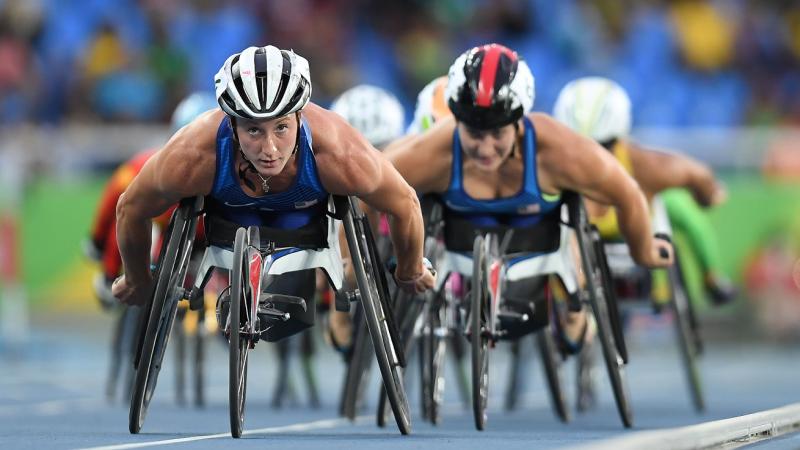
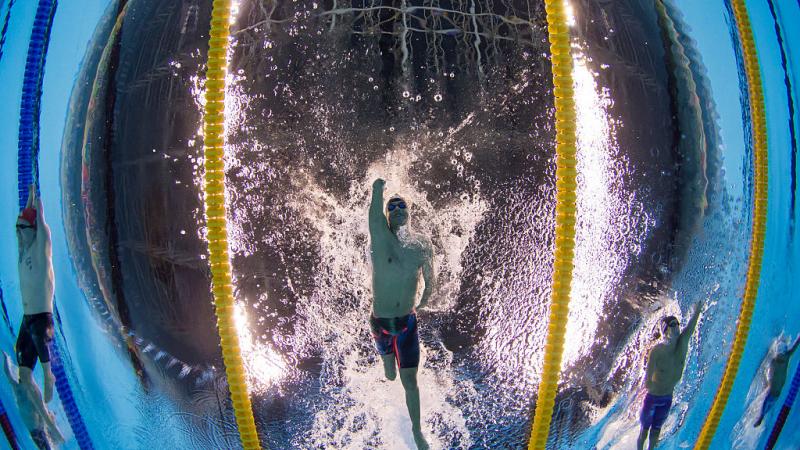
The 10 Eligible Impairments are often referred to as three distinct groups: a) physical impairments, comprising the eight impairments that cause activity limitations that are biomechanical in nature – impaired muscle power, impaired range of movement, limb deficiency, leg length difference, hypertonia, ataxia, athetosis, and short stature; b) vision impairment and c) intellectual impairment. Each Paralympic sport defines which Eligible Impairment types they provide sporting opportunities for in their classification rules. While some sports provide competition opportunities for athletes with all ten Eligible Impairments (e.g. Para athletics, Para swimming), other sports are specific to one Eligible Impairment (e.g. goalball is a sport for athletes with vision impairment) or a selection of Eligible Impairments (e.g. equestrian para-dressage, para-cycling). The assessment of whether or not an athlete has an Eligible Impairment for a sport must be conducted by the International Sport Federation governing that sport. It is important to note that the presence and permanency of one of the sport’s Eligible Impairments is a prerequisite to participate in para sport, but not the sole criterion. Second Step: Determining if the athlete meets the Minimum Impairment Criteria for a sport Each sport’s classification rules describe how severe an Eligible Impairment must be for an athlete to be considered eligible to compete. These criteria are referred to as Minimum Impairment Criteria. Minimum Impairment Criteria must ensure that an athlete’s Eligible Impairment affects the extent to which the athlete is able to execute the specific tasks and activities fundamental to the sport. Examples of Minimum Impairment Criteria are a maximum height defined for athletes with short stature, or a level of amputation defined for athletes with limb deficiency. Minimum impairment criteria should be defined on the basis of scientific research, which assesses the impact of impairments on the sport’s activities. As sports require different activities, the Minimum Impairment Criteria are also specific for each sport. Consequently, an athlete may meet the criteria in one sport, but may not meet the criteria in another. If an athlete is not eligible to compete in a sport, this does not question the presence of a genuine impairment. It is a sport ruling. Third Step: Deciding an athlete’s sports class After an athlete has been designated as eligible for a sport, the classification panel will assess which Sport Class the athlete will compete in. There are some sports that only have one Sport Class (e.g. Para ice hockey or Para powerlifting). On the other hand, due to the different disciplines (running, jumping, throwing events) and because the sport includes athletes of all 10 Eligible Impairments, Para athletics have over 50 Sport Classes. A Sport Class groups athletes with a similar activity limitation together for competition, so that they can compete equitably. This again means that Sport Classes are different by sport. It also means that a Sport Class does not necessarily comprise athletes with the same Eligible Impairment. If different impairments cause similar activity limitation, athletes with these impairments are allowed to compete together. This is why, for example, in athletics wheelchair racing events, you will see athletes with paraplegia and leg amputations racing together. Determining in which Sport Class should the athlete compete in is a multi-staged process, often consisting of so called physical and technical assessments followed by an observation in Competition before final Sport Class is allocated and a Sport Class Status is designated. Due to, for example, the progressive nature of some impairments and their impact on certain activities, athletes are sometimes classified a number of times throughout their career. Also, when the medical condition of an athlete changes, athletes need to inform the sport and ask for re-assessment. The assessment of whether or not an athlete complies with Minimum Impairment Criteria for a sport, the allocation of a Sport Class and designation of a Sport Class Status is undertaken by a classification panel. Classification panels include a minimum of two classifiers. Classifiers are trained experts – physicians, physiotherapists, coaches, sport scientists, psychologists, ophthalmologist, and have a complimentary knowledge about impairments and their impact on the respective sports. Classifier’s qualifications and required competencies are determined by each International Sport Federation. |