
Para Canoe
Para canoe was first recognised as a sport in 2010 and made its Paralympic debut at the Rio 2016 Paralympic Games.
About Para Canoe
Para canoe is a test of the fastest individual athlete in a kayak (K) or va’a (V) across a 200m distance.
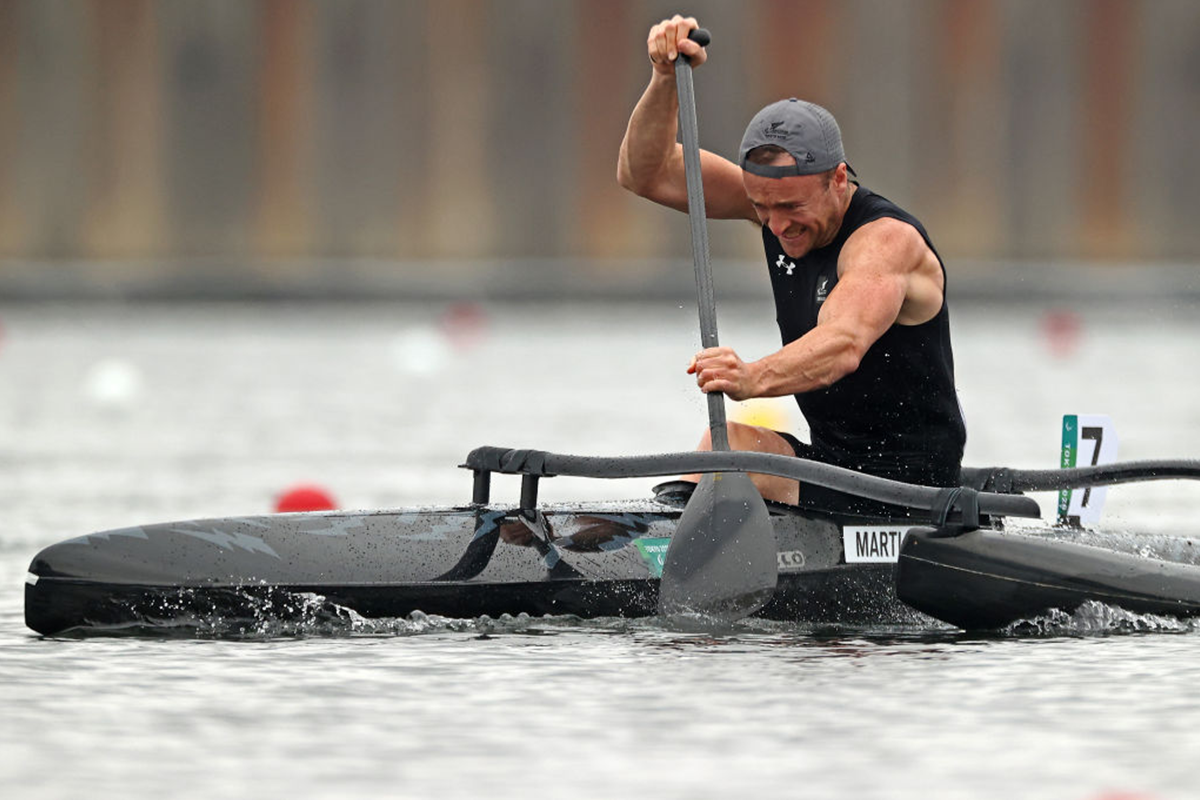
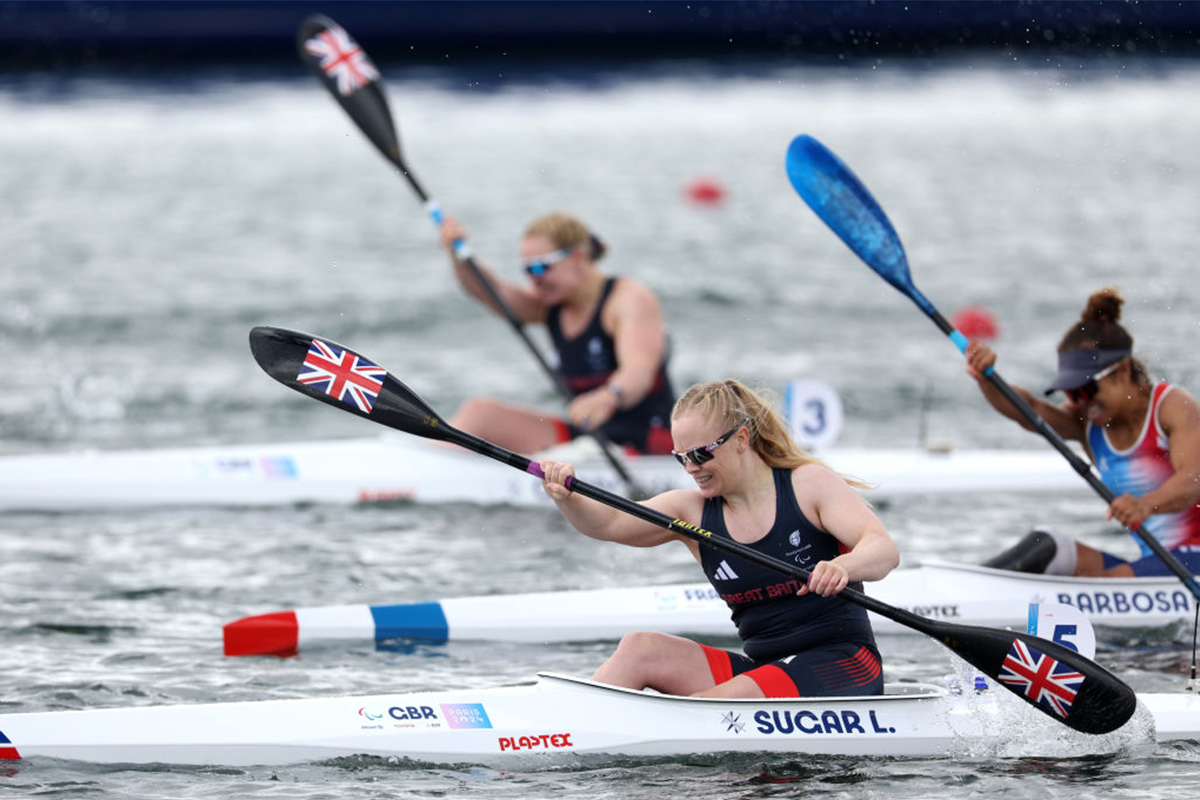
Para kayaks have a wide base, and va’a boats have an attachment called an outrigger to aid in balance. Athletes compete with either a double-sided paddle in the faster discipline, kayaking, or single sided paddle in va’a.
Para canoe athletes have five classifications; KL 1-3, and VL2 and 3. The classification is an indication of the lower limb and trunk mobility of each athlete.
Adaptations can be made to seats, sockets, and grip to aid athletes. Although the athlete is not allowed to be attached to the boat for safety purposes.
The first appearance of Para canoe in the Paralympics was in Rio 2016, with va’a showcased in the Tokyo 2020 Paralympic Games.
There are two international governing bodies of the sport. The International Canoe Federation (ICF) governs canoe meanwhile va’a is governed by the International va’a Federation.
Para Canoe History
Although canoeing has been present in society for thousands of years, Para canoe was only recently recognised. Before the sport became widespread, the International Canoe Federation (ICF) and the International Va’a Federation (IVF) advocated for the inclusion of Para canoe competitors in non-disabled competitions.
The first Para canoe racing event took place in 2009 as the Canoe Sprint World Championships.
The sport was only regarded as an exhibition sport, and initially titled Paddleability until it was recognised in 2010 as Para canoe.The first World Championships in Para canoe were also held in 2010.
The Rio 2016 Paralympic Games were the first time Para Canoe joined the Paralympic programme, and featured only kayak. The Tokyo 2020 Paralympic Games added va’a as an event and both have been in the Paralympics since.
Currently 40+ nations are showcased in the ICF World Championships.
Did you know?
Great Britain dominates the medal table with 10 gold and 20 overall medals, compared to second place. Australia comes second with four gold and nine overall medals.
Video
Para Canoe News
View more
Paralympic stars to watch at the Para Canoe World Championships in Milan
Paris 2024 Paralympians and the sport’s rising stars are set to compete in 12 medal events at the Para Canoe World Championships, taking place in Milan, Italy, from 20 to 24 August 2025

Best Para canoe moments of Paris 2024
Former Team GB Para swimmer Charlotte Henshaw won two gold medals at Vaires-sur-Marne Stadium

Brahim Guendouz: whizz in the kitchen and on a kayak
Since he first jumped in a kayak, Algerian Paralympic canoe champion Brahim Guendouz knew he had found the place he was meant to be

Para canoe action starts with big names defending their titles
Australia's Curtis McGrath and Hungary's Peter Kiss are among the ones to watch in the water

New dad McGrath hopes to make sick baby son proud
Australian Para canoeist Curtis McGrath became a father about a month before the Paralympics

How Para canoeist Scott Martlew made Paralympic history
Scott Martlew made history at Rio 2016 as the first Para canoeist to represent New Zealand at a Paralympic Games. He goes to Paris 2024 hoping to make it on the podium in the men’s KL2 class
Federation contact information
Contact
Richard Pettit
PARALYMPIC AND PARA SPORT RESULTS
Search for all results from Paralympic Games events and selected other international Para sport events.
Para Canoe FAQ
Para canoe is an adaptation of canoe for those with disabilities in their legs, trunk, or arms.
Para kayak is an event under the Para canoe sport umbrella. The sport contains two types of events: va’a and kayak.
Kayaks in the Para canoe provide more balance and stability assistance to athletes. They have a wider base than the non-disabled sport canoes.
Para Canoe athletes initially competed in able-bodied competitions. Para canoe was recognised as a sport in 2010 and first appeared in the Paralympics in 2016.
The Para canoe sprint is 200 metres.
Para canoe and Para rowing are differentiated by distance and equipment type. Para rowing utilises oars rather than paddles, with slimmer boats competing over longer distances. Usually, Para rowing competitions offer longer 2000-metre distances compared to Para canoe, which offers 200-metre distances.