

Blind Football
Players shout “voy” when they go for the ball to cue other players in the defense or attack.
About Blind Football
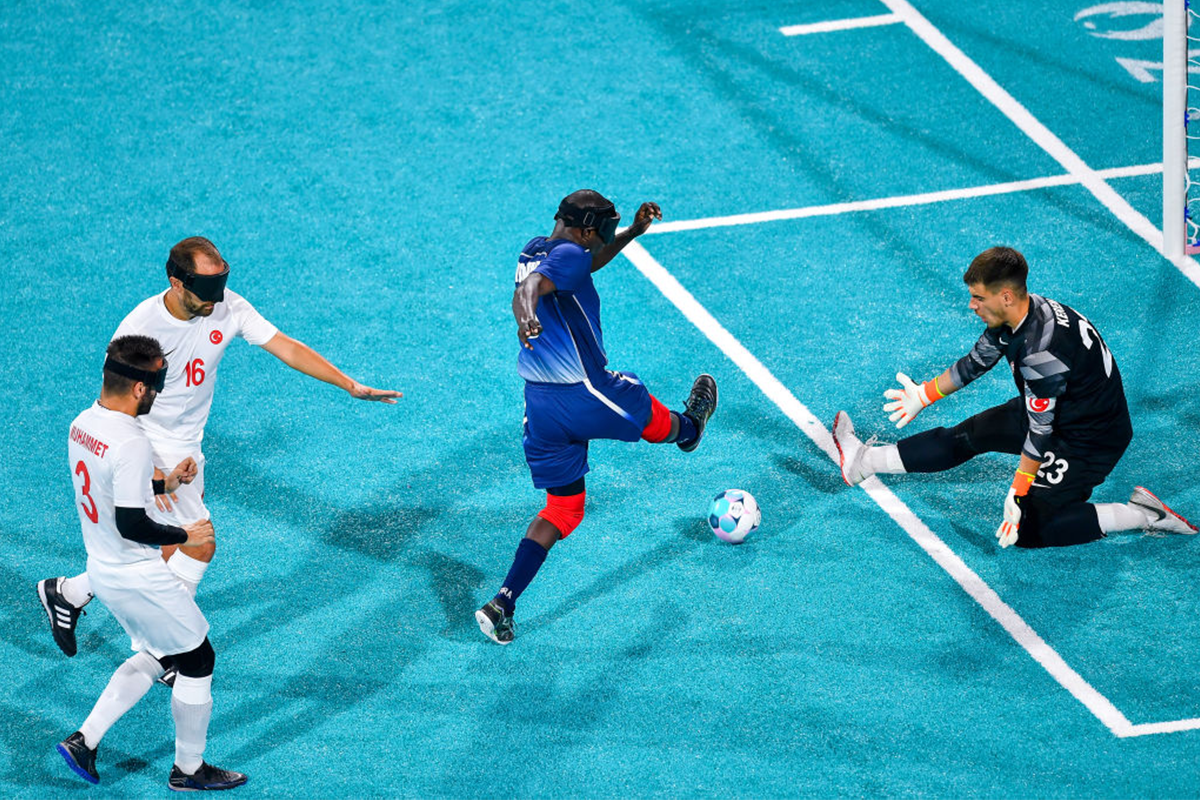
Blind football is a sport played in teams of five by athletes with vision impairements. Of those athletes, four are outfielders and one is a goalie. The rules are similar to the official FIFA rules with a few adjustments. Each team competes to score a goal on their opponent’s side of the field.
Specialised equipment is used in blind football to ensure adaptability. The ball is hollow with a noisemaker inside allowing players with a vision impairement to follow. In this case, the entire stadium must be completely silent until a goal is scored.
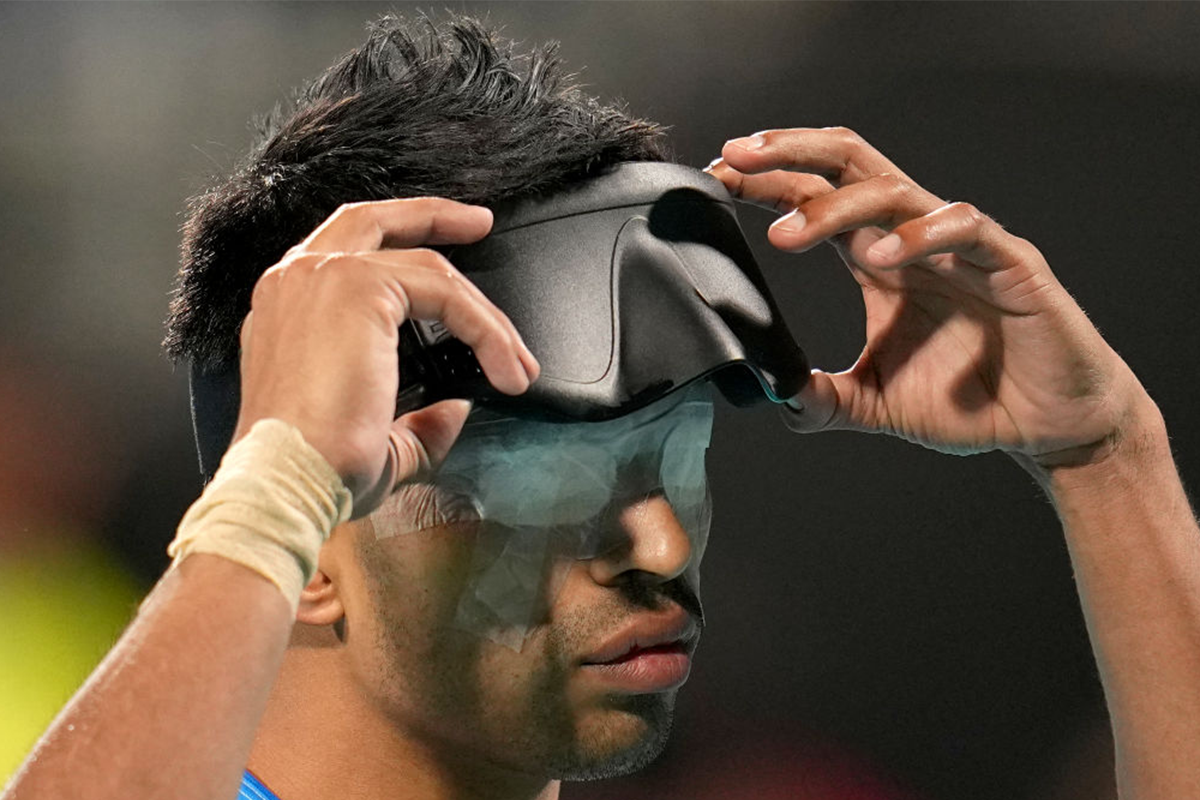
All players except for the goalie wear blackout eye masks to ensure fair play and equal vision standards. The goalie must be sighted or partially sighted and does not need to wear a mask.
Teams are allowed to receive assistance from both an offensive guide and their goalie. The goalie may shout instructions to the players, and the offensive guide makes noise near the goal, providing a reference for where to shoot the ball towards.
Blind football matches last 30 minutes with a half-time at the fifteen-minute mark. The size of the goal and the field is smaller than football. The field is 40m by 20m and surrounded by kickboards. These kickboards prevent the ball from leaving the field of play.
Offside and throw-ins are not present in blind football, showcasing ongoing play of the sport in each fifteen-minute half.
Blind Football History
Initially developed and was popularised in Spain, in the 1920s blind football slowly gained traction in the rest of the world. Brazil began engaging with the sport in the 1960s, and has been a key player in Paralympic Games since its debut.
Blind football was played by different rules in each country until 1996 once the International Blind Sports Federation (IBSA) was recognised as the sport’s governing body.
Blind football first featured at the Paralympics in Athens 2004, and has featured at every Games since.
Brazil has won gold at every Games except for Paris 2024 where they came third against France (1st) and Argentina (2nd).
Did you know?
There has never been a women’s event in blind football at the Paralympics. Women’s interest in the sport continues to grow with more training camps and tournaments and may one day garner enough participation to be included at the Paralympic level.
Video
Blind Football News
View more
Frederic Villeroux remembers France’s blind football gold a year on
France's Frederic Villeroux looks back on winning blind football gold at the Paris 2024 Paralympics on home soil on the first anniversary of the Games.

Best blind football moments of Paris 2024
France become the second-ever nation to win Paralympic gold

Blind football history will be written on Day 10
Day 10 of Paris 2024 promises must-watch action in blind football, wheelchair tennis and Para swimming among many other key moments

Argentina deny Brazil sixth blind football gold
Argentina will face hosts France in the blind football final on 7 September

Brazil's Jefinho hopes for fifth blind football medal
Brazilian star Jefinho has high hopes for a Paris 2024 Paralympic medal in the city that inspired him

Paris 2024 blind football groups decided
The official ball for Paris 2024 was also unveiled during the draw on 25 May
Federation Contact
Blind Football
Mariano Travaglino
PARALYMPIC AND PARA SPORT RESULTS
Search for all results from Paralympic Games events and selected other international Para sport events.
Blind Football FAQ
Offensive guides make noise around the goal and bang on the post of the goal to signal its location to the blind outfielders.
No, the goalkeepers in blind football are either fully sighted or partially sighted, classified by the B2 or B3 category.
Blind football was recognised in 1996 by the International Blind Sport Association (IBSA).
Players in blind football have a range of sight from slightly limited to very limited. Therefore, all outfield players are required to wear a blackout eyemask to ensure the same level of sight and fair play.
"Voy" is said by players when they decide to approach the football. The word signals to other players that one is approaching and allows them to make decisions accordingly.
One individual is not credited with the invention of blind football, but the sport originated in Spain in the 1920s.
The adapted equipment needed for blind football includes a ball with a bell inside, blackout eyemasks, a smaller field and goal, and kickboards to surround the field.
A yellow card is a caution to players showcasing non-sportsman like behaviour.
Although you do not to be blind to play blind football, to compete one must be classified as vision impaired (B2 or B3).
No, blind football does not have the offside rule.
The goalie is the one player on the field that can be completely sighted or partially sighted. They can aid their team by shouting instructions during the game.