



Wheelchair Rugby
Originally named murderball, wheelchair rugby made its Paralympic debut during the Sydney 2000 Paralympic Games.
about wheelchair rugby
Wheelchair rugby had first appeared as a demonstration sport during the Atlanta 1996 Paralympic Games. The sport later made its Paralympic debut during the Sydney 2000 Games in which eight teams competed.
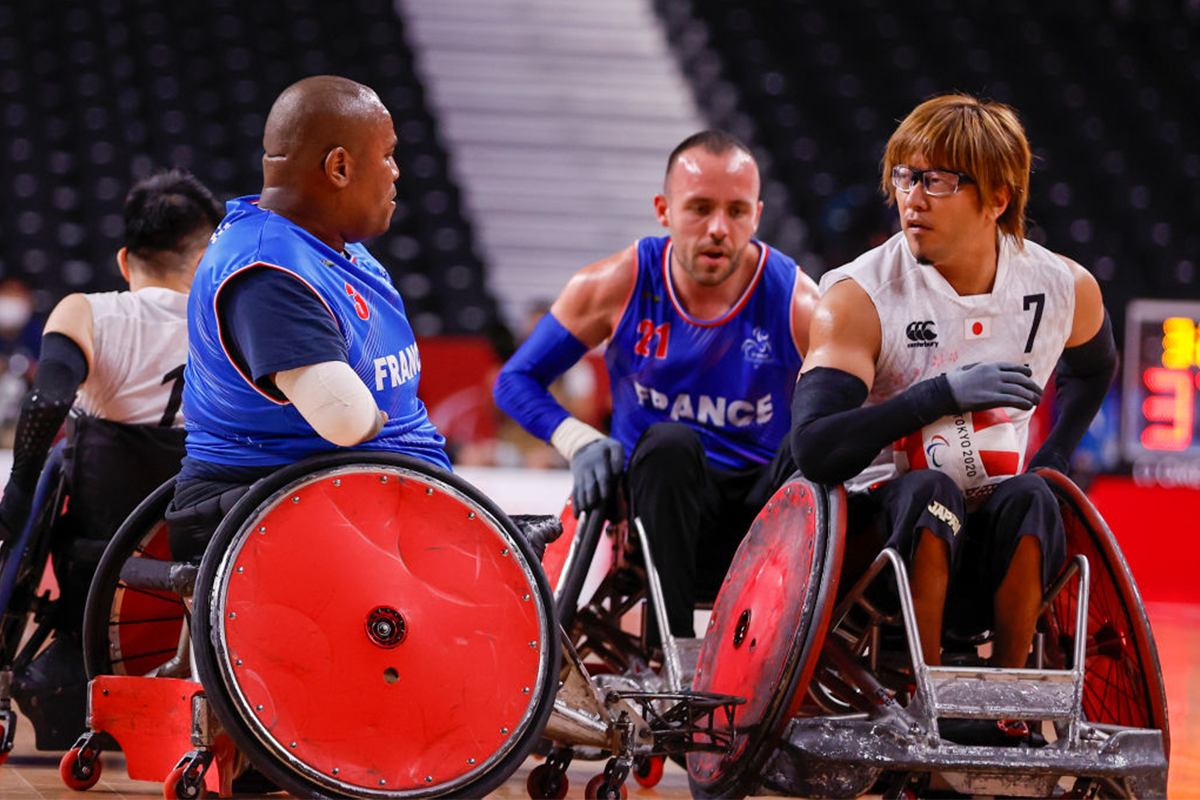
The matches are played indoors on a basketball court. The game is played in teams of four known as quad rugby that both men and women are welcome to compete. Only four athletes at a time from one team are permitted on the court but a team may consist of up to 12 athletes. Players are categorised into seven different classes based on their disability.
Wheelchair rugby is a full-contact sport in which athletes aim to score points by carrying the ball across the opponent’s try line. The try line defines the place that must be crossed with the ball to score a point. Striking a player from the back results in a penalty, but all other attacks on a player’s wheelchair are fair game. Matches are played over four eight-minute quarters.
World Wheelchair Rugby (WWR) is the global governing body of the sport.
Wheelchair Rugby history
In 1977 athletes with quadriplegia searching for a fun and fair sport similar to wheelchair basketball founded wheelchair rugby. The sport slowly transitioned from Canada to the USA and led to the first international tournament in 1982. However, the first international tournament with a participating country outside of North America took place in 1989.
Wheelchair rugby was officially recognised as a sport for persons with disabilities in 1993. Later in 1994, the IPC recognised wheelchair rugby, leading to its demonstration at the Atlanta 1996 Paralympic Games.
Wheelchair rugby then made its Paralympic debut in the Sydney 2000 Paralympic Games in which eight countries competed. Since the debut eight countries have competed in each summer Paralympic Game.
The current leader of medals in wheelchair rugby is the United States with two gold and seven medals overall, but Australia follows closely with two gold medals and five medals overall.
The sport has dramatically grown over the past 50 years with over 40 countries either playing the sport or creating programmes for participation.
Did you know ?
The Paris 2024 Paralympics was the first time ever that a woman scored a goal in wheelchair rugby during Paralympic competition.
Video
Wheelchair Rugby News
View more
LA28 publishes first look at the Paralympic competition schedule
2028 Paralympic Games set to feature more sports and medals than ever before

Mike Whitehead reflects on wheelchair rugby career
Canada's Mike Whitehead reflects on his 24-year wheelchair rugby career, nine months after announcing his retirement in 2025

"Sky is the limit” for Great Britain’s wheelchair rugby team
Great Britain's wheelchair rugby team is "starting again" after finishing fourth at the Paris 2024 Paralympics

Japan’s wheelchair rugby team gets fairytale ending
Japan won gold in the wheelchair rugby tournament after beating the USA 48-41 at the Paris 2024 Paralympic Games

GB face battle to retain wheelchair rugby crown
USA head a cluster of countries with genuine gold medal hopes in one of the Paralympic Games' most captivating sports

Yukinobu Ike ready to lead Japan to wheelchair rugby gold
Three years after finishing the Tokyo 2020 Paralympic Games with a bronze medal, Japan wheelchair rugby captain Yukinobu Ike is ready to lead his team to the top of the podium at Paris 2024.
Federation contact information
Wheelchair Rugby
Tom Dielen
PARALYMPIC AND PARA SPORT RESULTS
Search for all results from Paralympic Games events and selected other international Para sport events.
Wheelchair Rugby FAQ
Wheelchair rugby is similar to rugby, it is a full contact sport in which players competing on a basketball court must carry the ball over their opponents try line. The players are not allowed to attack another person’s body but may target their wheelchair. The players cannot have possession of the ball for more than ten seconds without bouncing or passing it. To score points, an athlete must cross their opponents try line while holding the ball.
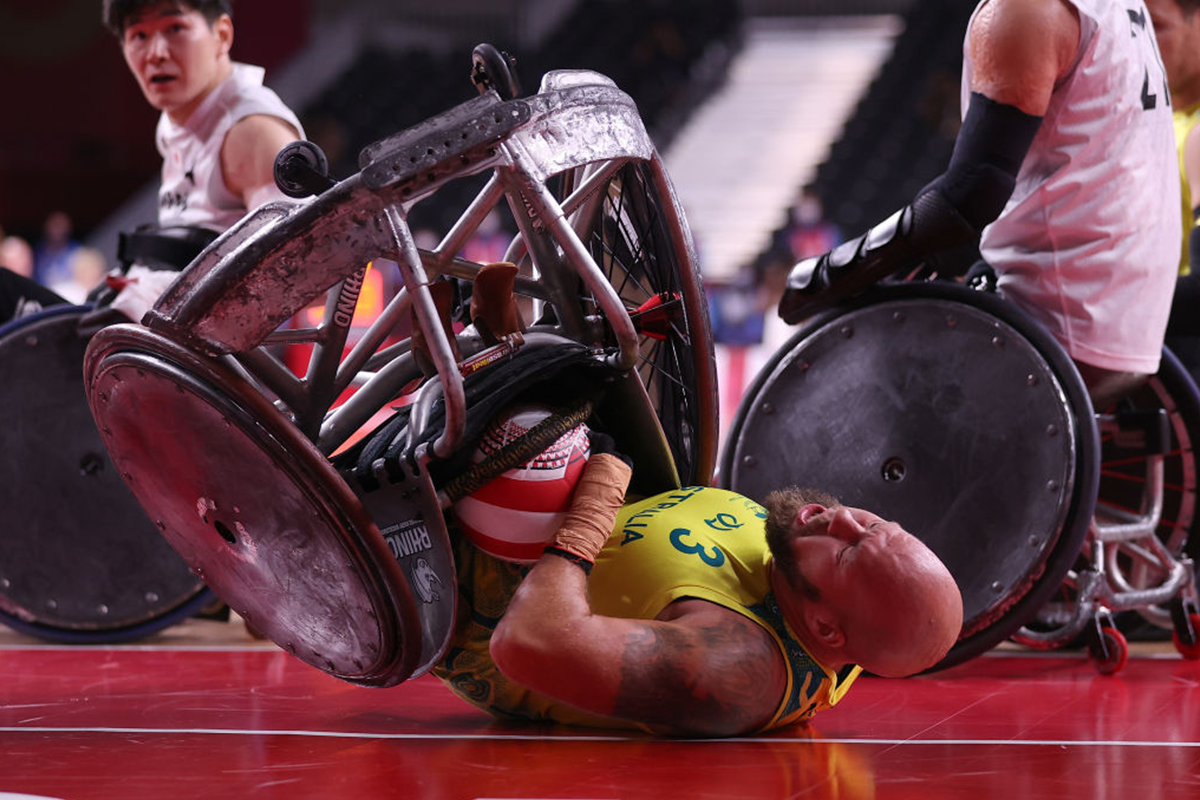
Due to wheelchair rugby’s rough high-contact nature, in which athletes can bump into and knock each other over, the sport was named murderball.
No, wheelchair rugby uses a soft round ball, compared to rugby’s oval shaped ball.
Although no tackling is allowed, wheelchair rugby is a full-contact sport allowing for collisions between wheelchair users. This tends to lead to athletes being knocked over constantly during games.
Yes, wheelchair rugby is mixed gender. Both men and women can compete on the same teams.
Non-disabled people are welcome to play wheelchair rugby. However, competition for able bodied people in wheelchair rugby is not possible at the Paralympic level.
Yes, players must bounce the ball. In wheelchair rugby players cannot be in possession of the ball for more than ten seconds without either bouncing or passing the ball.
Four players are allowed on the court during competition, and a team consists of 12 players overall.
WR5s is played with five players on the court, while WRFours is played with only four players on the court. WRFours is contested in the Paralympics, while WR5s is not.
In wheelchair rugby there are seven possible classification categories an athlete may fall into depending on the extent of their disability (0.5, 1.0, 1.5, 2.0, 2.5, 3.0 and 3.5). Players classified as 0.5 have limited function in both legs and in their arms and hands.