


Milano Cortina 2026: Meet Milo and Tina, discover past Winter Games mascots
As we count down to the Milano Cortina 2026 Paralympic Winter Games, there's no better time to get to know Milo, Tina and mascots from recent Games 04 Feb 2026



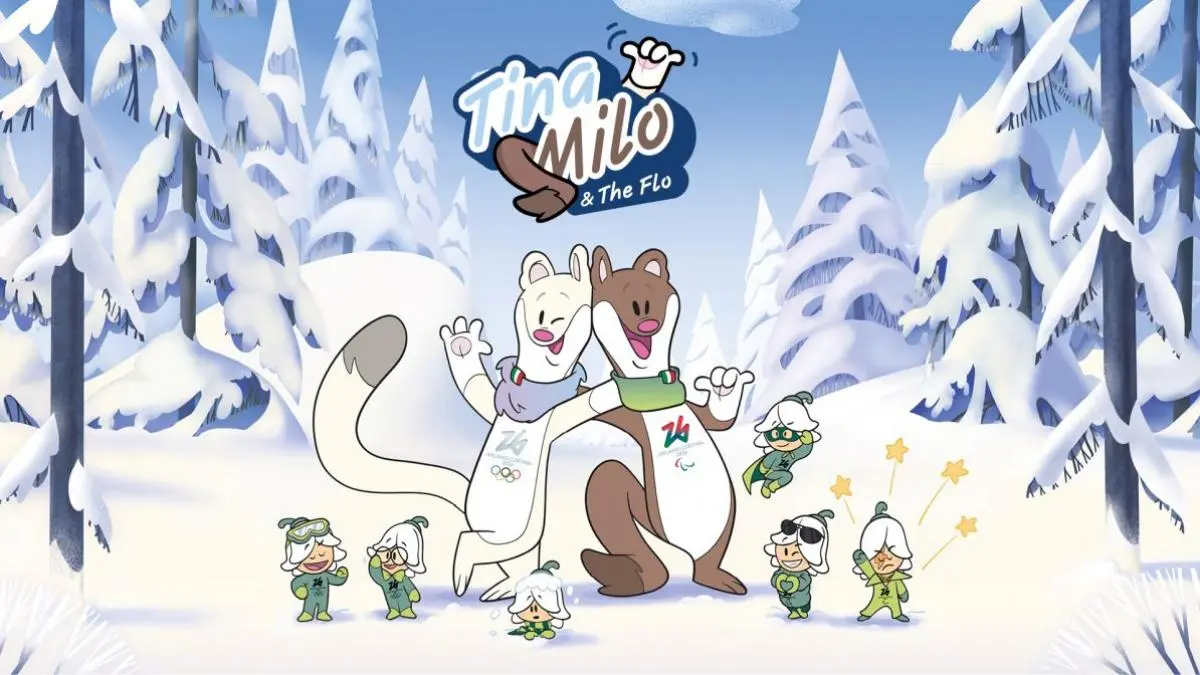
With the Milano Cortina 2026 Paralympic Winter Games just around the corner, there’s no better time to get to know Milo, the brown stoat mascot who embarks on a journey to the Games with his sister Tina, the Olympic mascot.
As we count down to what promises to be the most beautiful Paralympic Winter Games in history, discover more about Milo, Tina and mascots from recent Games.
Can you name them all?
Milo (Milano Cortina 2026)

Milo, who lives in the mountains, is a dreamer and a passionate inventor. He loves to invent things and creates musical instruments during his spare time. His other hobbies include playing in the snow and performing practical jokes.
Milo was born without a paw but learned to walk using his tail. Stoats are perfect animals to embody the Italian spirit because they are curious by nature and have the ability to change the colour of their fur according to the seasons.
His sister Tina is the Olympic mascot. She lives in the city and enjoys going to concerts and events that have introduced her to the transformative force of beauty.
The siblings are on a journey to Milano Cortina 2026 after waking up one day to find a “new light” in the distance. They let their curiosity guide them - and the light turned out to be the Olympic and Paralympic Winter Games. They are accompanied by six little snowdrops, The Flo. The little flowers will be Tina and Milo’s best friends, bringing fun, games and happiness to the great adventure of Milano Cortina 2026.
Guess where their names comes from? Milo was named after Milano, while his sister Tina was named after Cortina.
Shuey Rhon Rhon (Beijing 2022)

Shuey Rhon Rhon is a red Chinese lantern child that welcomed athletes at the most recent Paralympic Games. Stuffed toys of the mascot were a big hit in the host country and just like a lantern, Shuey Rhon Rhon brightened the atmosphere at the Games.
The Chinese lantern is a millennia-old cultural symbol associated with harvest, celebration, prosperity and brightness. Red is the most auspicious and festive colour of the country, and its overall design draws from traditional Chinese paper cutting.
Do you know why the mascot’s heart is glowing? The glow symbolises warmth, friendship, courage and draws inspiration from Para athletes, who light up the dreams of millions of people every day.
Bandabi (PyeongChang 2018)

Bandabi, the Asiatic black bear, captured the hearts of athletes and spectators in PyeongChang in 2018. The mascot symbolises strong will and courage.
But why a black bear? Along with the white tiger, the motif of the Olympic mascot Soohorang, the two animals appear in South Korea’s foundation mythology and are closely associated with Korean culture and folklore.
The cuddly black bear with a cap in red, blue and green – the colours of the Paralympics' Three Agitos symbol – is also known for pulling off some amazing dance move during the Games.
Ray of Light and Snowflake (Sochi 2014)

Ray of Light and Snowflake, the mascots of the Sochi 2014 Paralympic Games, came from outside of the Earth.
Ray of Light, which has amber skin and bright, large eyes and hair looking like flames, landed on Earth first and soon found out that he and people have a lot in common. But he felt lonely until he saw a shooting star falling to earth, which turned out to be Snowflake – a girl with skin as white as snow, coming from a cold planet.
The Ray of Light and Snowflake invented wheelchair curling and ice sledge hockey together.
Sumi (Vancouver 2010)

Meet Sumi, the mascot of the Vancouver 2010 Winter Games. The mascot wears the hat of the orca whale, flies with the wings of the mighty thunderbird and runs on the furry legs of the black bear.
Sumi is passionate about the environment and an avid fan of all Paralympic sports. Sumi and Olympic mascots Miga, a snowboarding sea bear, and Quatchi, a shy and gentle giant, were joined by a sidekick named Mukmuk.
What does Sumi represent? Sumi’s name is based on “Sumesh,” the Salish word for guardian spirit. It represents diverse backgrounds not only of people in Canada, the host country, but also of the athletes who gathered in Vancouver for the Games.
Aster (Torino 2006)

Athletes competing at the Paralympics are unique, just like snowflakes. Aster, the mascot of the Torino 2006 Winter Paralympic Games, reflects that concept. Aster represents the unique way an individual can practice sport, and also their unique way of life.
Otto (Salt Lake City 2002)

Do you know Otto the otter from the Salt Lake City 2002 Games? The mascot, inspired by the animal with a long history in Utah, represents agility and vitality. Having nearly reached extinction in the early 20th century, otters were successfully reintroduced into the wild in 1990, showing that any challenge can be overcome.
Discover more about Paralympic mascots
Secure your tickets for the Milano Cortina 2026 Paralympic Winter Games
Milano Cortina 2026, which takes place from 6-15 March 2026, is set to be the most beautiful Paralympic Winter Games yet. Ticket prices start at EUR 10 for children under 14, with approximately 89 per cent of the tickets available for EUR 35 or less.
For more information, please visit tickets.milanocortina2026.org


