


PARA ALPINE SKIING
Para alpine skiing evolved from the efforts of veterans with disabilities in Germany and Austria following WWII.
about Para Alpine Skiing
Para alpine skiing is practised worldwide and features six disciplines: downhill, slalom, giant slalom, super-G, alpine combined, and team events. Not all disciplines are included in the Paralympic Winter Games. Athletes combine speed and agility while racing down slopes at speeds going up to around 100km/h.
Athletes compete in three categories based on their functional ability (sitting, standing and vision impaired), and a results calculation system called factored timing allows athletes with different impairments to compete against each other.
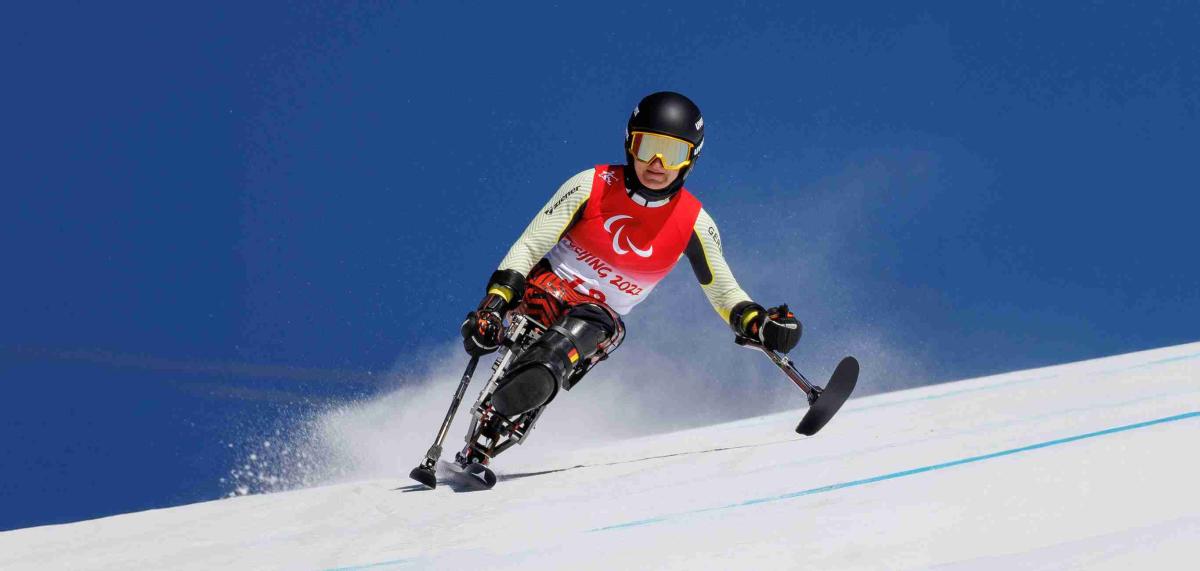
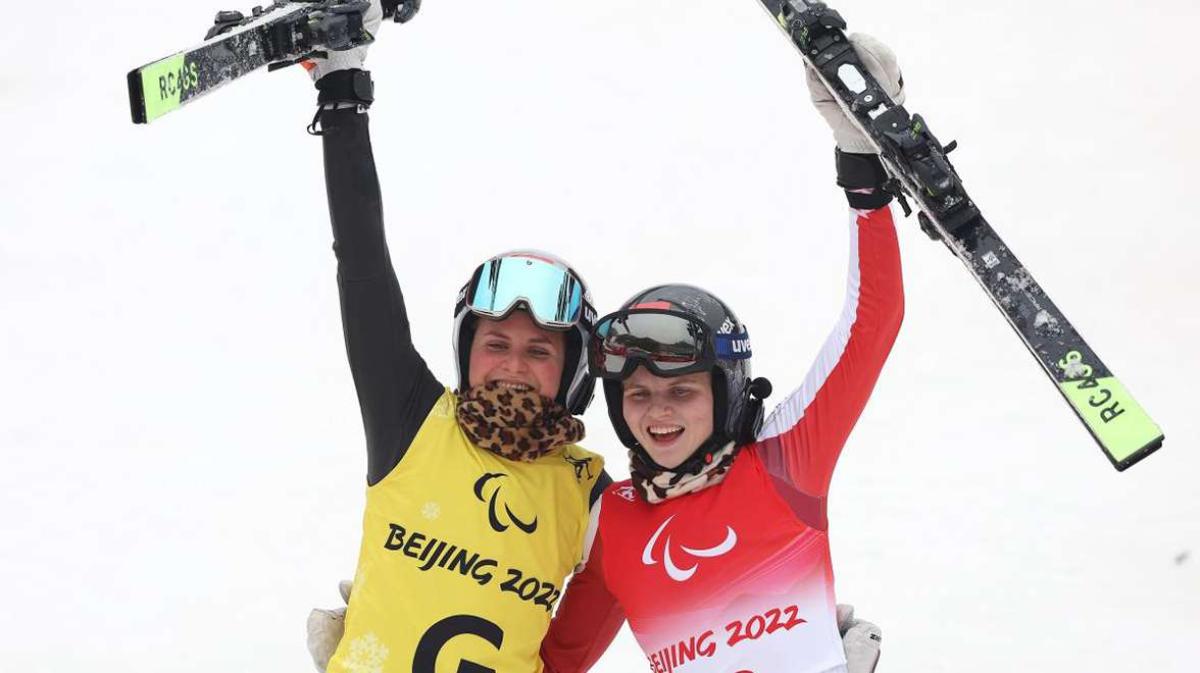
Athletes use equipment that is adapted to their needs including single ski, sit-ski or orthopaedic aids. Skiers with vision impairment are guided through the course by sighted guides using verbal signals to indicate the course to follow. The distance between an athlete and guide in slalom must be less than three gates and less than two gates for giant slalom, super-G and downhill, excluding delay gates and vertical combinations. Failure to comply will lead to disqualification.
In downhill medal events each athlete competes one run down a long, steep course, passing through a number of gates. Their finish time determines the final order based on ascending time. If an athlete misses a gate they are disqualified.
In the slalom competition each athlete competes two runs on the same day on different courses. Each course is shorter than other events but has a high number of gates that the athlete must negotiate. Times from the two runs are added together to determine the final order based on ascending total time. If an athlete misses a gate they are disqualified.
Giant slalom follows the same format as the slalom event but is a longer course with fewer gates, as well as a bigger distance between the gates than slalom. The number of gates is determined by the vertical drop of the course. If an athlete misses a gate they are disqualified.
The super-G is a speed event where each athlete completes one run down the course with their finish time determining the final order based on ascending time. The course is generally shorter than downhill but longer than slalom and giant slalom.
A alpine combined competition represents the final result of two disciplines - usually one of either a downhill or super-G and a single run of slalom. Each athlete competes two runs on the same day on different courses. Times from the two runs are added together to determine the final order based on ascending total time.
The International Ski and Snowboard Federation (FIS) is the global governing body of Para alpine skiing.
Para alpine skiing history
Para alpine skiing made its debut at the Örnsköldsvik 1976 Paralympic Winter Games with 78 athletes from 12 countries competing in two disciplines – slalom and giant slalom.
Downhill was added to the Paralympic programme in 1984 in Innsbruck, Austria, while super-G was added in 1992 at Tignes Albertville. Super combined was included as a Paralympic discipline at Vancouver 2010.
Initially only athletes with an amputation and vision impairment were able to compete in Para alpine skiing events at the Paralympic Winter Games. Sit-skiing was introduced as a demonstration sport at the Innsbruck 1984 Paralympic Winter Games and became an official part of the programme at Nagano 1998.
The sport has been governed by FIS since July 2022, having previously being governed by World Para Alpine Skiing.
Since the sport made its Paralympic debut in 1976, 29 countries have won at least one medal, including 23 that have won a gold medal.
Austria, who topped the Para alpine skiing medals table at Beijing 2022, is the most successful Paralympic nation in the sport to date, winning 280 medals, including 94 gold.
The most successful male athlete is Germany’s Gerd Schoenfelder (16 gold medals, four silver medals and two bronze medals) while the most decorated female skier is fellow German Reinhild Moeller (16 gold medals, two silver medals and one bronze medal).
At the Vancouver 2010 Paralympic Winter Games, Canada’s Lauren Woolstencroft made history when she became the first athlete to win gold medals in all five disciplines. Germany’s Anna Schaffelhuber repeated the feat at Sochi 2014.
DID YOU KNOW?
The Austrian Aigner siblings (Johannes, Veronika and Barbara, along with guide and sister Elisabeth), won an impressive four gold, three silver and two bronze, for a total of nine medals in a single edition of the Games in Beijing 2022 in the same discipline (visually impaired category).
Para alpine skiing at Milano Cortina 2026
At the stunning Tofane Alpine Skiing Centre, up to 190 Para alpine skiers will compete for glory in a total of 30 medal events. The first gold medalist of Milano Cortina 2026 will be crowned on 7 March in the women’s downhill VI event.
Video
Alpine Skiing News
View more
Introduction to Para alpine skiing
Your complete guide to Para alpine skiing, an exciting, technical and daring sport

A day in the life of Canadian Para alpine skier Kalle Eriksson
Canadian Para alpine skier Kalle Eriksson and his guide Sierra Smith have built up trust and communication over a four-year partnership that they will put to the test at their first Paralympic Winter Games

Ask the Paralympic pioneers: Gerd Schoenfelder on Para alpine skiing
This week, some of the most successful Paralympians of all time are answering your biggest questions about their sports

Skiing royalty Forster continues her medal quest
Germany's Anna-Lena Forster treasures her Paralympic medals and experiences and aims for more at Milano Cortina 2026

Para alpine skier Oscar Burnham's summer training
Follow Para alpine skier Oscar Burnham as he trains under the summer sun—cycling, surfing, and paragliding his way toward the Milano Cortina 2026 Paralympic Winter Games

Taiki Morii eyes storybook finish at Milano Cortina 2026
Two decades after winning his first Paralympic medal at Torino 2006, Japan’s Taiki Morii wants to return to Italy to win a medal of the 'most beautiful colour' at Milano Cortina 2026
Federation contact information
The International Ski and Snowboard Federation (FIS) governs the sport of Para alpine skiing.
Contact
Bruno Sassi
PARA ALPINE SKIING
Search for all results from Paralympic Games events and selected other international Para sport events.
Alpine Skiing FAQs
Para alpine skiing includes five events: downhill, super-G, alpine combined, giant slalom, and slalom whereas Para cross country skiing includes competition across distances in sprint, 5km, 10km and 20km long courses.
Men's skis must be at least 165 centimetres (65 in) long and women's skis need to be at least 155 centimetres (61 in) long. Bindings used for skis have a maximum height of 55 millimetres (2.2 in).
Depending on an athlete’s classification, skiers can use outriggers, sit-skis, monoskis or any skis approved by FIS. The monoski, a shell attached with a shock absorber to one or two skis and used in combination with mini-skis, and helps the athlete balance. Athletes can also use Bluetooth headsets to communicate with their guides if they are vision impaired.
There are currently five Para alpine events on the Paralympic programme: downhill, super-G, super combined, giant slalom, and slalom.