
Para Climbing
After being officially recognised by the International Paralympic Committee in 2017, Para climbing will make its programme debut at the LA28 Paralympic Games.
about para climbing
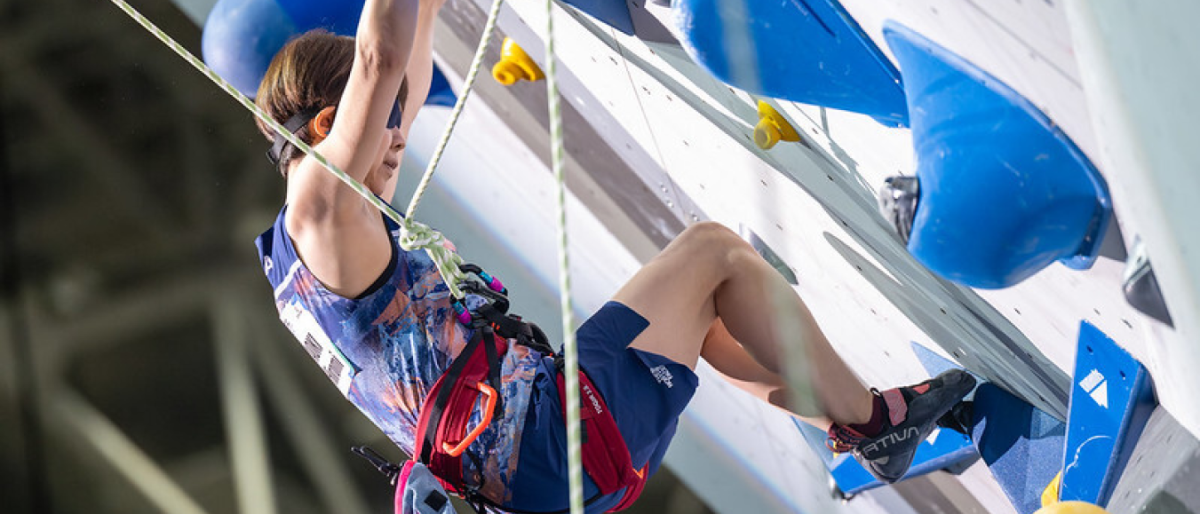
Para climbing is a problem-solving sport requiring creative movement, spatial awareness, and the ability to read and interpret complex three-dimensional challenges.
Para climbing is divided into two main categories of classification, physical and visual impairment. To ensure fair and inclusive competition, athletes are classified into specific categories based on the type and level of their disability. Physical impairments are categorized as AU2 & 3, AL 1 & 2, and RP 1 - 3 whereas visual impairments are categorised as B1-3.
Para Climbing history
Making its first international debut in 2006 in Ekaterinburg with athletes from four National Federations, its popularity has grown exponentially over the past years.
In 2017, The International Paralympic Committee (IPC) officially recognised the IFSC as an international federation – marking a major milestone for the sport.
Did you know ?
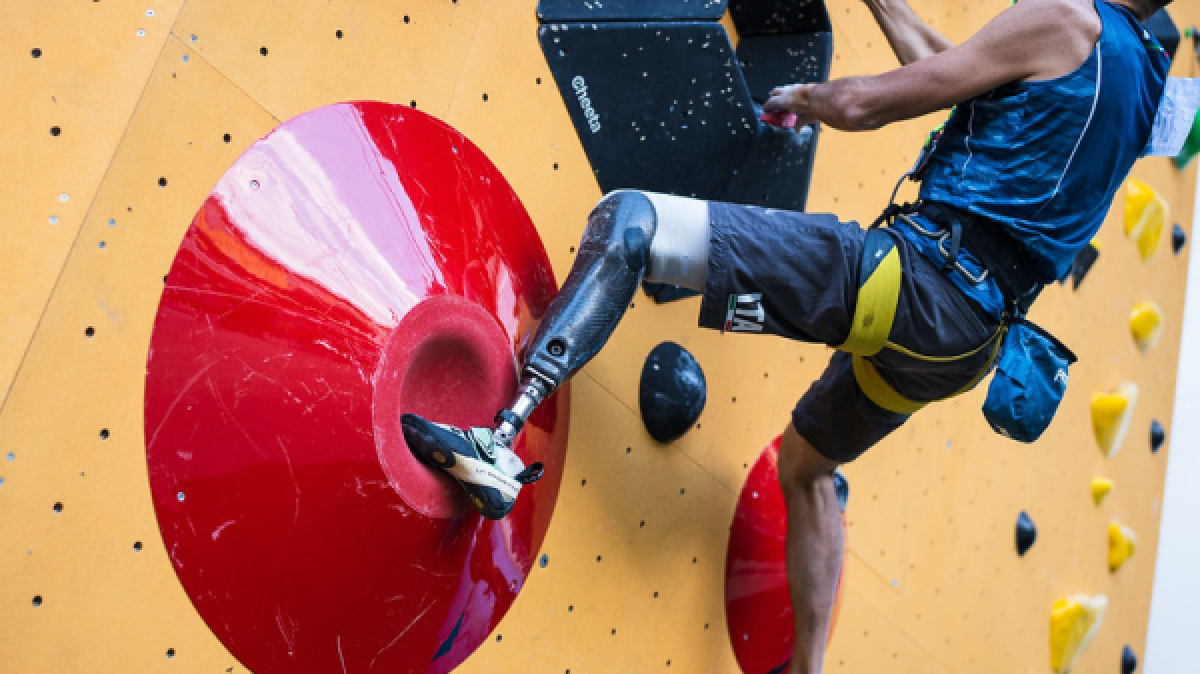
There are no specified regulations around the use of prosthetics in Para climbing, so the climbers themselves can choose whether to wear their prosthetics.
Video
Para Climbing News
View more
LA28 publishes first look at the Paralympic competition schedule
2028 Paralympic Games set to feature more sports and medals than ever before

Para climbing athletes excited for LA28 Paralympic debut
With three years to go until LA28, Para climbers Solenne Piret, Brian Zarzuela, and Sarah Larcombe share their excitement about the sport’s Paralympic debut

LA28 proposes Para Climbing for the 2028 Paralympic sport programme
LA28 becomes the first organising committee in Games history to propose additional sports for both the Olympic and Paralympic Sport Programmes

Milano Cortina 2026: Your guide to Team France
Meet the French delegation and discover top moments that shaped their journey to the Milano Cortina 2026 Paralympic Winter Games

World Series 2026 kicks off under open skies and outdoor pool in Australia
Nine-meeting calendar gets under way in Gold Coast with strategic shift towards outdoor racing ahead of LA28 Paralympics

Dubai 2026 GP: Paris 2024 stars steal the show in season opener
Led by their top Paralympic stars Sumit, Navdeep and Preeti Pal, India top medals table with 16 golds, followed by Colombia (11) and Kenya (6). Hosts UAE claim six golds to finish fourth place at the first Grand Prix of the 2026 WPA season
Federation contact information
Para Climbing
Abel Vaudo
PARALYMPIC AND PARA SPORT RESULTS
Search for all results from Paralympic Games events and selected other international Para sport events.
Para Climbing FAQ
Para climbing will make its Paralympic debut at the LA28 Paralympic Games.
Para climbing is scored
Climbers are allowed to use a chalk bag with commercially liquid or dry climbing chalk, a climbing helmet, harness, and climbing shoes.
The wall used in top rope events should be a minimum of 12m.