



Para Fencing
Para fencing first took place at the Stoke Mandeville Games, the precursor to the Paralympic Games.
About Para Fencing
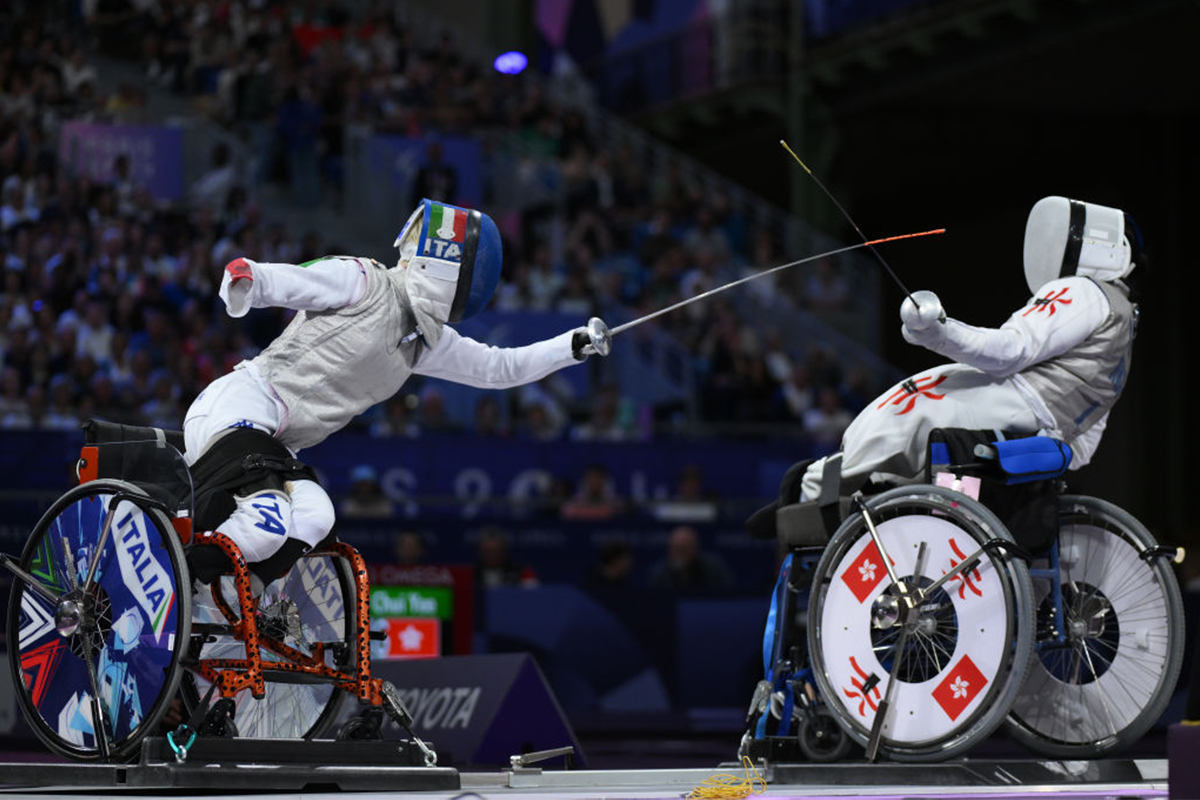
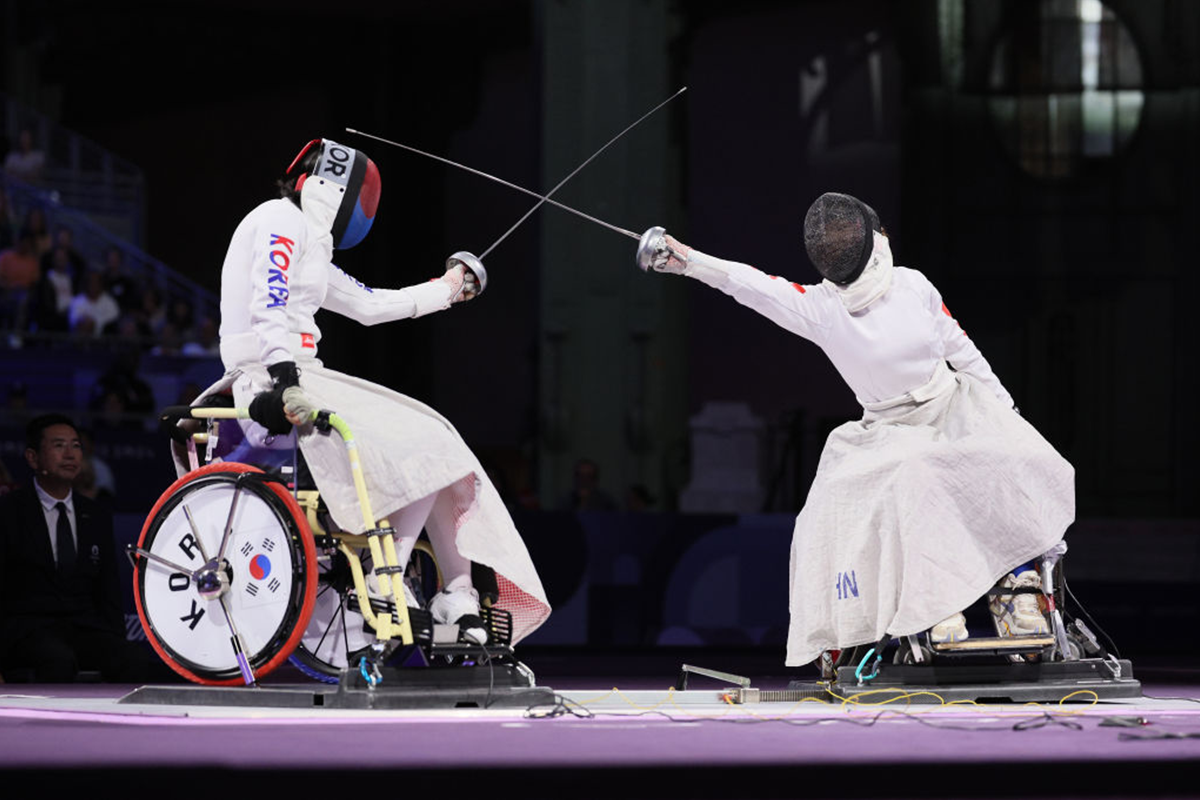
In Para fencing, two opponents in wheelchairs fastened into place using metal frames sit diagonally across from each other and attempt to strike within a targeted area on their challenger’s body.
Para fencing was previously known as wheelchair fencing and represents fencing for athletes with disabilities.
In Para fencing athletes compete in foil, epee and sabre events in either team or single groups. Athletes with disabilities such as amputations, spinal-cord injuries and cerebral palsy participate in Para fencing in two different classes, A and B.
Metal aprons and an electronic tracking system are used to ensure the targeted areas are properly hit. In knockout rounds, matches are won by the athlete that either scores the most points or becomes the first to score five points within the three-minute time period.
World Para Fencing is the global governing body of the sport.
Para Fencing history
Sir Ludwig Gutmann originally included Para fencing in the Stoke Mandeville Games in 1954, the preceding games to the Paralympics. Although the game was previously known as wheelchair fencing, it is currently known as Para fencing.
Para fencing was featured at the first Paralympic Games in Rome in 1960 in which only Italian athletes competed. Para fencing has been at every Paralympics since.
Initially only sabre and foil events were included in the Paralympic Games sports programme at Rome 1960, but epee was quickly added in the Tokyo 1964 Paralympic Games.
By the Atlanta 1996 Paralympic Games, the current classification system of category A and B was introduced. Classification aims to ensure a level-playing field by ensuring an athlete is placed in a category according to how their disability impacts their sport performance.
The London 2012 Paralympic Games offered 12 events and welcomed the most participants in any Games. There were 105 participants (69 men and 36 women) representing 24 countries. Many more than the original games in Rome that only featurednine Italian competitors.
Recently, mixed gender team epee and foil events have been added to the LA 2028 Paralympic Games and will aid in making LA 28 the most gender balanced Games to date.
The global governing body of the sport is the International Wheelchair and Amputee Sport Federation (IWAS). Wheelchair fencing at the Paralympic level is only offered in the 16 aforementioned events, although it is offered at a broader range at the international level.
Did you know ?
Fencers at first competed in travaux chairs, which were heavy wheelchairs that easily kept the athletes in place. However, as wheelchair frames developed and new lighter materials were used, movement during competition became challenging. The initial solution was for someone to crouch behind the fencers and physically hold the wheelchairs.
Video
Para Fencing News
View more
Para fencer Nino Tibilashvili targeting gold at LA28
We caught up with two-time Paralympic fencing medallist Nino Tibilashvili

Scott Rodgers elected chair of USA Fencing Board of Directors
Three-time Paralympian Scott Rodgers makes history as the first active athlete to lead the USA Fencing Board of Directors

IPC mourns the loss of wheelchair fencer Michal Dabrowski
Michal Dabrowski won the silver medal in the men's Sabre category B event and bronze in the men's Epée category B event at the Paris 2024 Paralympic Games

Launch of World Para Fencing marks start of new era
The 2025 season will feature a series of competitions held under World Para Fencing

All-female wheelchair fencing line-up for South Korea
South Korea are competing in Paralympic wheelchair fencing for the first time in 12 years - with an all-female team and coaching set-up

Can Italy's wheelchair fencing star Bebe Vio make it a hat trick?
After winning wheelchair fencing gold in Rio 2016 and Tokyo 2020, Italy's Bebe Vio comes into Paris hoping for three in a row
Federation Contact
Para Fencing
Udo Ziegler
PARALYMPIC AND PARA SPORT RESULTS
Search for all results from Paralympic Games events and selected other international Para sport events.
Para Fencing FAQ
Depending on the event type, the rules are different. In sabre and foil events, athletes score points by being the first to strike one another. In epee, both athletes may score points when striking each other at the same time, with no “priority”. In knockout rounds, the first athlete to strike their opponent five times, or the most overall within three minutes is the victor. In final rounds, a fencer must earn 15 hits within nine minutes to win.
Para fencing is classified in A and B categories. A is for athletes who can fully control their trunk and upper limbs but have limitation in their lower limbs. Category B is for athletes that have impairment in their lower limbs and either their trunk and/or upper limbs.
A Para fencer wins a match by being the first to strike their opponent 15 times within nine minutes or strike the most during the final round of competition.
Yes, left-handed persons may have an advantage in Para fencing. This is especially true given that they are less common, therefore harder to practise against and more unpredictable.
Athletes with permanent disabilities that affect their legs and feet (class A) or an additional impairment in trunk movement and/or fencing arm (class B) are eligible for Para fencing.
Previously known as wheelchair fencing, Para fencing is contested by two athletes in a wheelchair who are stabilised in place. Para fencing is not contested standing.