
The PyeongChang 2018 Paralympic Winter Games witnessed a record 564 athletes from 49 delegations – more than any previous edition - compete in 80 medal events across six sports.
Of the competing delegations, 26 won a medal, beating the record set at the Lillehammer 1994 Paralympic Winter Games. A record 20 countries won gold, beating the previous best of 17 set at the Nagano 1998 and Salt Lake City 2002 Paralympic Winter Games.
Four countries - China, Croatia, Kazakhstan and hosts South Korea – all won their first Winter Games gold medals.
As part of hosting the Games, the PyeongChang 2018 Organising Committee launched "Actualising the Dream," a project aimed at promoting Paralympic winter sports, raising awareness of Para sport and its athletes, and securing the social inclusion of people with an impairment.
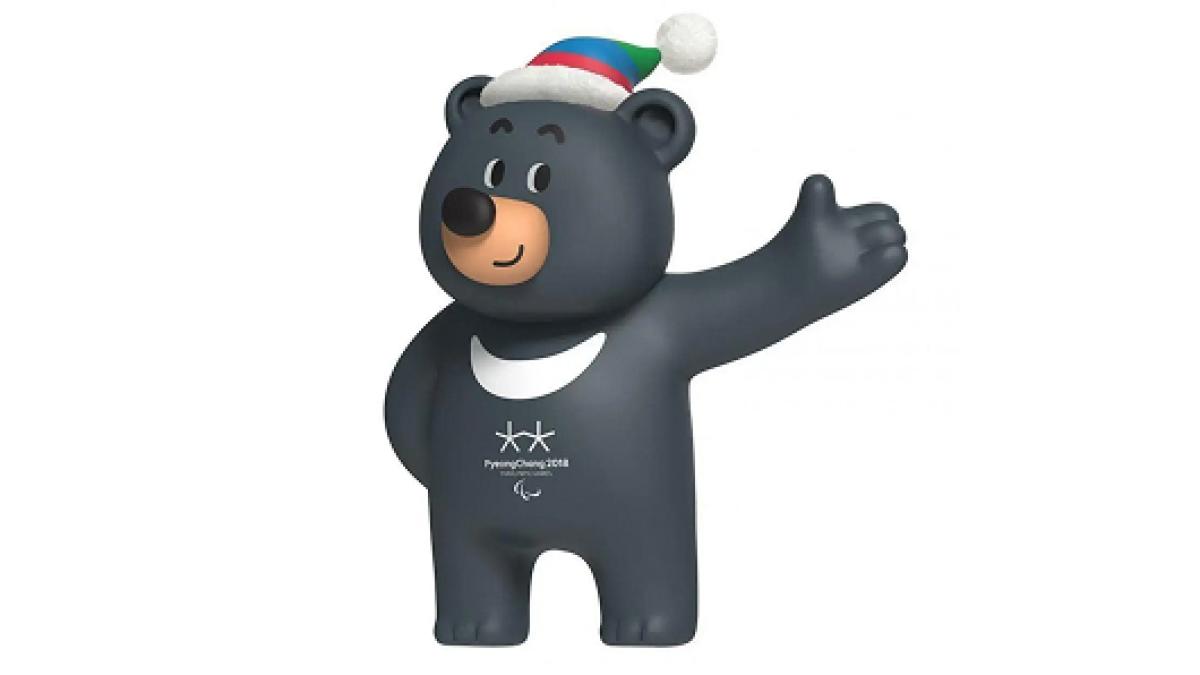
The official mascot of PyeongChang 2018 was "Bandabi" an Asiatic black bear, a symbol of strong will and courage founded on South Korea's mythology and closely associated with Korean culture and folklore.
COMPETING NATIONS AND ATHLETES
PyeongChang 2018 brought together a record 564 Para athletes from 48 nations – the most ever.
NPC Russia were suspended from taking part under their colours and flag due to a WADA report which proved alleged widespread, state-sponsored doping in the country. Their athletes competed as neutral athletes under the IPC flag.
Two nations – North Korea and Tajikistan – made their Paralympic Winter Games debuts.
USA had the biggest delegation with 69 Para athletes, followed by Canada (52) and Japan (38). USA also had 19 female Para athletes, the most of any competing nation.
Top Videos
SPORTS
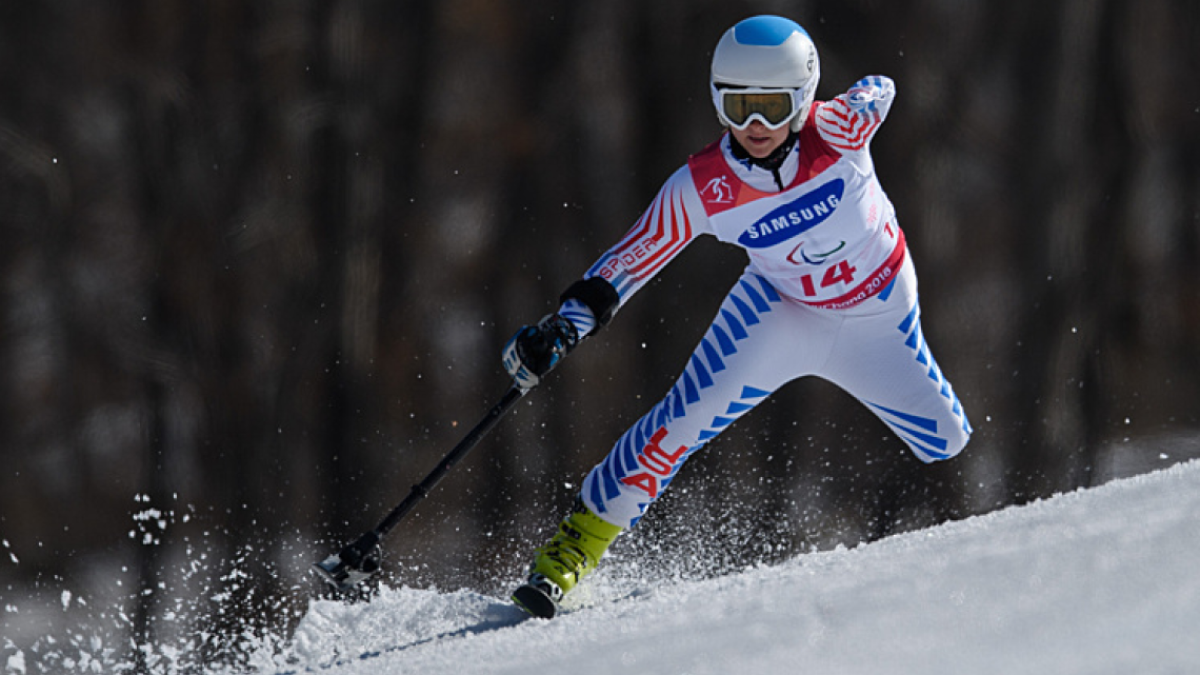
PyeongChang 2018 featured six sports with Para snowboard having its standalone medal events following its Paralympic debut four years earlier as part of the Para alpine skiing programme.
Para alpine skiing featured 30 medal events which attracted 141 Para athletes from 33 countries.
There were 18 medal events in Para biathlon which involved 95 Para athletes from 16 counties, while the 20 Para cross-country skiing medal events saw 155 Para athletes from 31 countries take part.
Eight nations contested the Para ice hockey competition and 12 teams competed in the wheelchair curling medal event.
©AI Tielemans for OIS/IOC
OUTSTANDING PERFORMANCES
Slovakia's Henrieta Farkasova with guide Natalia Subrtova won four golds and one silver medal in Para alpine skiing. France's Marie Bochet also won four golds in the sport.
Neutral Paralympic Athlete Ekaterina Rumyantseva won three golds and two silvers in Para biathlon and Para cross-country skiing, as did France's Benjamin Daviet.
Dutch snowboarder Bibian Mentel-Spee claimed double gold only two months after undergoing cancer surgery. She did not have much time to prepare for Pyeongchang 2018 having spent most of 2017 undergoing treatment for cancer. The first gold in the Snowboard-Cross was emotional, with Mentel-Spee embracing her son and mother right after beating compatriot Lisa Bunschoten.
South Korea's Eui Hyun Sin made domestic headlines winning his country's first ever Paralympic Winter Games gold medal with success in the men's 7.5km sitting event in Para cross-country skiing.
Results
Of the 48 competing delegations, 25 won a medal, beating the record set at the Lillehammer 1994 Paralympic Winter Games. A record 20 countries won gold, beating the previous best of 17 set at the Nagano 1998 and Salt Lake City 2002 Paralympic Winter Games.
Four countries - China, Croatia, Kazakhstan and hosts South Korea – all won their first Winter Games gold medals.
USA topped the medal table with 13 gold medals, 15 silver and eight bronze. Canada and France were placed second and third respectively.
Slovakia topped the Para alpine skiing medals table, Ukraine in Para biathlon, and USA in Para cross-country skiing and Para snowboard.
In Para ice hockey USA won its third successive Paralympic gold, while China won its first ever Paralympic Winter Games medal with gold in wheelchair curling.


Paralympic Torch Relay
The PyeongChang 2018 Paralympic Torch Relay involved 800 torchbearers, covered 2,018km and linked eight Korean cities in eight days.
The PyeongChang 2018 Paralympic Torch Relay began its journey around Korea on 2 March in Seoul following a flame unification event at the Olympic Park which hosted the 1988 Paralympic Games.
The Paralympic flame then travelled to Chuncheon, Wonju, Jeongseon – the site of the Para alpine skiing and Para snowboard competitions – and Gangneung, where Para ice hockey and wheelchair curling were contested.
The Paralympic spirit is about creating infinite possibilities and outcomes. The PyeongChang 2018 Paralympic Torch Relay embodied this spirit by incorporating the infinity symbol (∞) in the form of number '8' throughout the journey.
OPENING CEREMONY
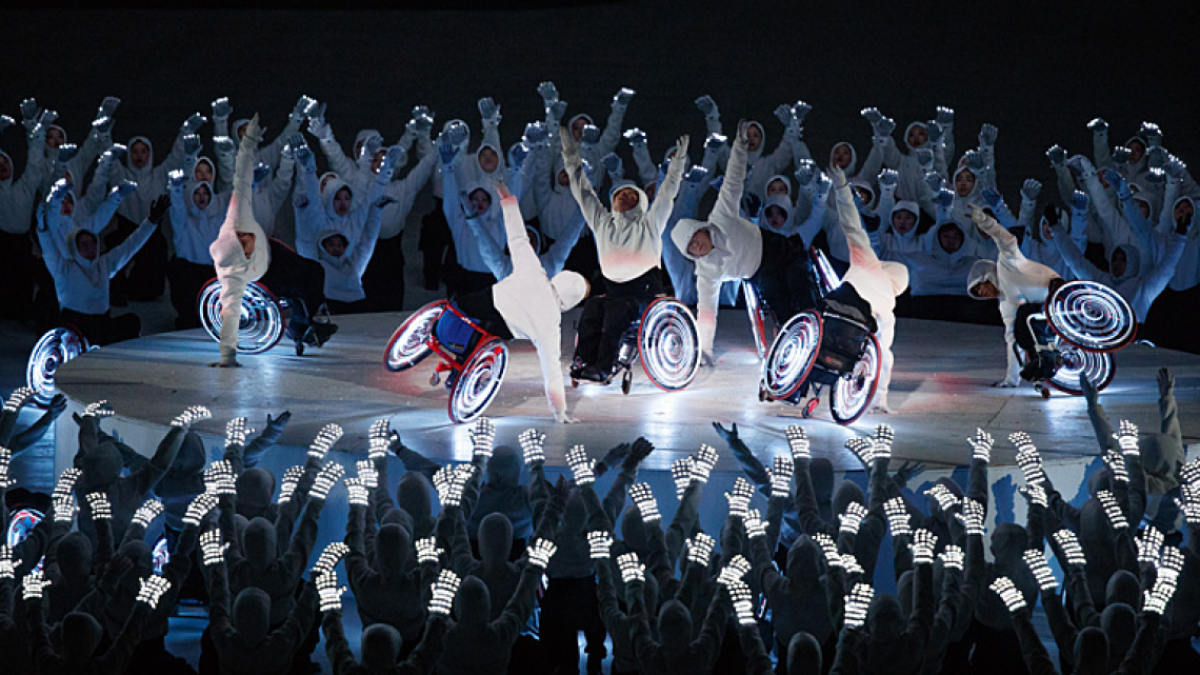
The vibrant Opening Ceremony in the Olympic Stadium welcomed the return of the Paralympics to South Korea for the first time since Seoul 1988, when the Olympic and Paralympic Games were held together in the same city for the first time.
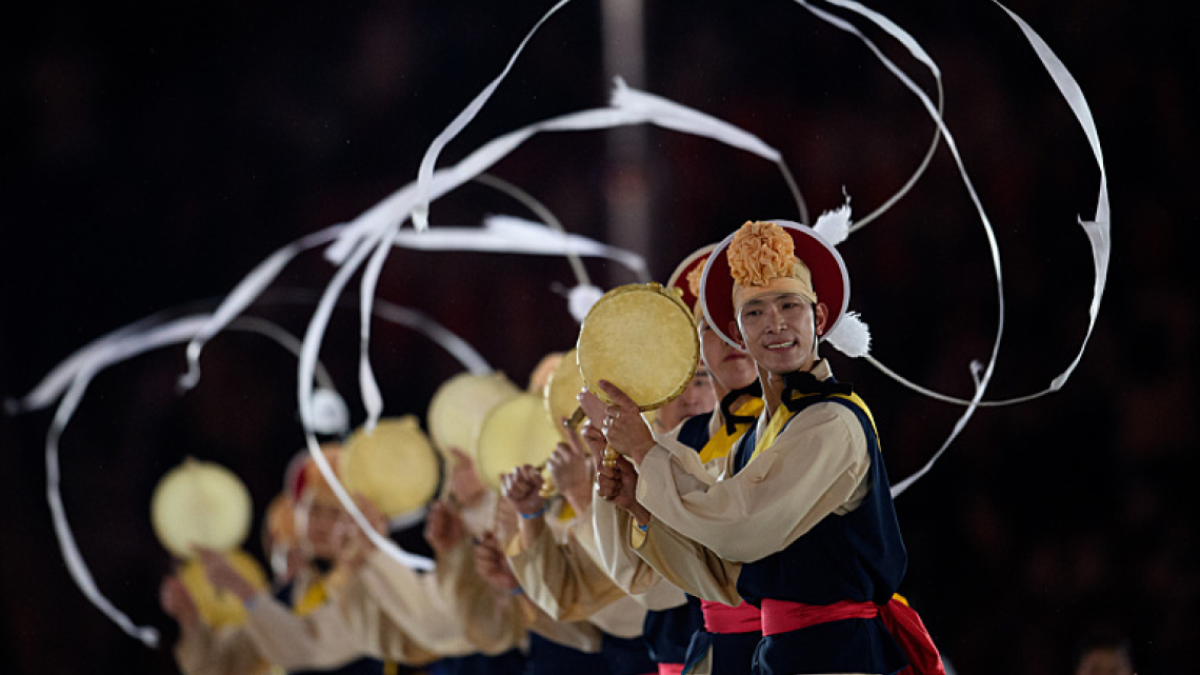
The evening began with a percussion performance led by Myeongjin Shin, an amputee, and was joined by Ga-in Flower Dancers following the beats of the drums that set the rhythm for the rest of the nine days of sporting action.
During the athlete parade, North Korea received a jubilant reception with Para cross-country skier Jonghyon Kim carrying his country's flag.
"Everything starts with a dream," IPC President Andrew Parsons said in his speech. "Great stories, great achievements, great drama. In a dream anything is possible.
"The journey of an athlete starts with a dream: the dream of competing in sport; of representing your country; of winning a medal and writing your name in to history."
The final torch relay symbolised the inclusive power of the Paralympics.
South Korean biathlete Bogue Choi and North Korean cross-country skier Yu Chol Ma entered the stadium together as torchbearers.
The flame made it all the way to South Korean Para ice hockey player Min Su Han, who, with his prosthetic, climbed a rope up to the Paralympic cauldron, and handed the torch off to compatriot and wheelchair curler Soonseok Seo. Along with able-bodied South Korean curler Eun-jung Kim, the two lit the cauldron.
©AI Tielemans for OIS/IOC
CLOSING CEREMONY
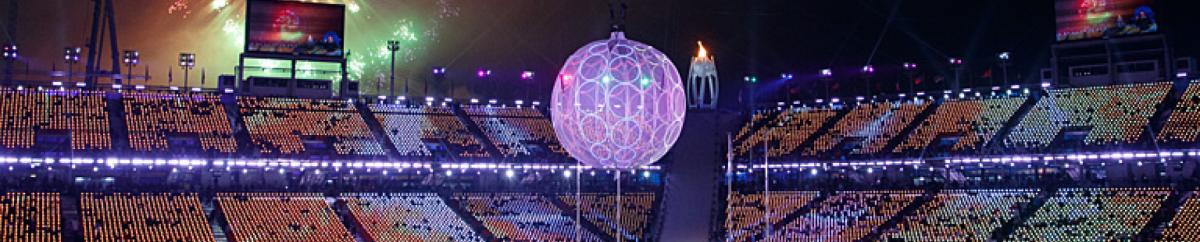
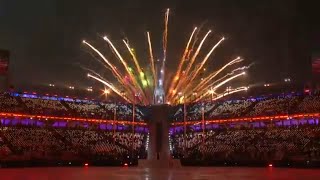
The PyeongChang 2018 Paralympic Winter Games came to an end in a blaze of fireworks at the PyeongChang Olympic Stadium.
The evening began with the playing of the South Korean national anthem and the hoisting of the country´s flag.
It was followed by Korean Folk song 'Arirang' to reminiscence the moments of joy and sorrow during the Winter Paralympics, and recognised the effort and contribution made by Para athletes, Gangwon Province residents, volunteers and staff.
Every delegation was again received with a wave of applause.
In a symbolic handover, the Paralympic flag was given to Chen Jining, the mayor of Beijing, the host city of the Paralympic Winter Games in 2022.
IPC President Andrew Parsons' final speech made reference to world-renowned physicist and author Stephen Hawking, who passed away earlier in the week.
The Closing Ceremony also included the official presentation of the Whang Youn Dai Achievement Award to New Zealand's alpine skier Adam Hall and Finland's Nordic skier Sini Pyy, the two Paralympians who were considered to best exemplify the spirit and values of the Games.
Marie Bochet, Rudolf Klemetti and Birgit Skarstein, the three IPC Athletes' Council winter representatives elected during the Winter Paralympics, were introduced, and a flower presentation was made to all the volunteers who participated in the event.
The Bae Hui Gwan Band, which is made up of musicians with impairments, then took to the stage preparing for the final act when it was joined by South Korean pop star Ailee. The PyeongChang Olympic Stadium became a great party to the delight of the home crowd.

©AI Tielemans for OIS/IOC
ATTENDANCE AND COVERAGE
Nearly 343,000 tickets were sold for PyeongChang 2018, smashing the previous record of 316,200 sales set at the Sochi 2014 Paralympic Winter Games. The number of tickets sold was double the number sold for the Torino 2006 Paralympic Winter Games and 110,000 sales greater than what was sold for Vancouver 2010.
PyeongChang 2018 broke all international broadcast and online viewing records, attracting more broadcasters and viewers than ever before for a Paralympic Winter Games outside of the host country.
According to Nielsen Sports figures published on behalf of the IPC, the Games were broadcast in more than 100 territories and attracted a cumulative audience of 2.02 billion people.
Although the overall figure of 2.02 billion is 3.7 per cent down on Sochi 2014 where the host market accounted for nearly 30 per cent of the total audience, the number of viewers outside of the host country for PyeongChang 2018 grew 27.4 per cent to 1.87 billion people.
The IPC's digital media channels also set new records during PyeongChang 2018.
Activities across its social media profiles reached more people than the London 2012 and Sochi 2014 Paralympic Games combined. More than 10 million videos were viewed across all IPC platforms, which was greater than London 2012 and Sochi 2014 combined. More than 1.7 million videos were viewed across Twitter, greater than the 1.2 million that were watched during Rio 2016.
Visitor numbers to Paralympic.org, the IPC website, were also up 62 per cent compared to Sochi 2014.
©AI Tielemans for OIS/IOC
Medals
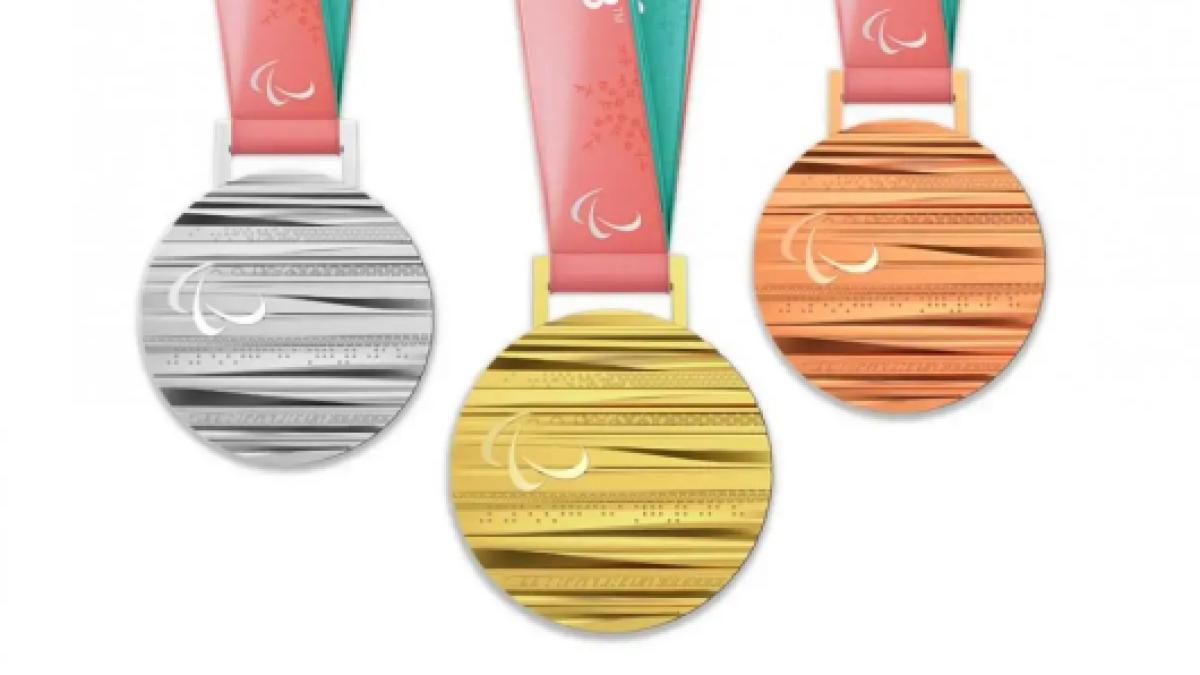
The medals crafted in gold, silver, and bronze for the PyeongChang 2018 Paralympic Winter Games feature asymmetrical, overlapping horizontal lines on the face of the medal, accompanied by the Agitos symbol. The horizontal lines are symbolic of equality. The face of the medal also features “Pyeong Chang 2018” written in Braille.
The Pyeong Chang Games logo is written on the back of the medal, decorated by clouds, mountains, wind, and wood. Each image is designed in a traditional style to pay homage to the two provinces of PyeongChang and Gangwon.
The medals were designed by Lee Suk-woo, a Korean industrial designer.
Mascot
Bandabi is the mascot of the PyeongChang 2018 Paralympic Winter Games. It is an Asiatic black bear commonly found in traditional South Korean mythology. Bandabi is known for being warm and welcoming and always cheering for the athletes. This bear’s name stems from a Korean word for half-moon, which is why it has the pattern on its chest.
Bandabi was carefully selected through a design competition. Overall, he represents strong will, courage, perseverance, and patience.
Torch
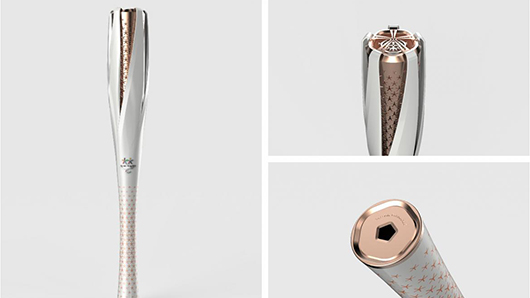
The PyeongChang 2018 Paralympic Winter Games torch is completely white, with specks of yellow on the handle and gold embellishments at the top, which are actually the PyeongChang Games symbol. The symbol and the handle of the torch represent the people of Korea, while those at the top represent people globally.
This symbol can be clearly seen on the face of the torch, reminiscent of two people holding hands. Below, the slogan of the Games is written in Korean, English, and Braille: Passion. Connected. Accompanying the slogan of the Games are the Paralympic values, courage, determination, inspiration and equality.
Pyeongchang 2018 News
View more
Top moments of 2025: Summer sports
With 2025 coming to a close, now is the perfect time to relive some of the best moments from the year.

Para Swimming World Series: Know all winners
First awarded in 2017, here are the winners of all editions of the World Series in the Female and Male Overall, High-Support Needs and Juniors Athletes categories, as well as the best National Paralympic Committee (NPC) of each year

Araujo earns third straight title; Smith leads women’s field in 2025 World Series
Athletes across seven categories conclude the season after eight stops worldwide as final ranking of athletes who topped their categories announced

More than medals: A tournament that sparked a movement
Team USA’s veteran forward Kelsey DiClaudio, who was named the MVP of the inaugural Women’s World Para Ice Hockey Championships, believes that the inaugural event was about more than medals; it became a turning point for the sport, sparking new momentum and inspiring a new generation of women

Sima Limouchi wins Para Sport Volunteer Award
Limouchi has been a driving force behind the Paralympic Movement in Iran through her extensive volunteer work and leadership

Candidates announced for Milano Cortina 2026 IPC Athletes' Council elections
The election for the IPC Athletes' Council will take place from 4 March to 13 March during the Milano Cortina 2026 Paralympic Games in PLY House in each of the three Paralympic Villages (Cortina d’Ampezzo, Milano, and Predazzo)